WHO Calls for Integrated Services to Restore Progress Against HIV, Hepatitis and STIs
A new WHO assessment says the world remains off track for the 2030 targets and calls for integrated care, stronger surveillance, sustained financing and community leadership.
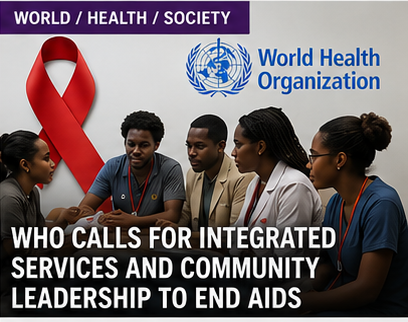
RIO DE JANEIRO — The World Health Organization has called for HIV, viral-hepatitis and sexually transmitted-infection services to be integrated more closely with primary healthcare as funding pressures threaten recent progress.
WHO released its 2026 mid-term assessment of the Global Health Sector Strategies during AIDS 2026 in Rio de Janeiro. The 122-page report concludes that progress is mixed and that the world remains off track to achieve the 2030 targets.
The report identifies HIV as the area where the strongest advances have been made. However, those gains are threatened by reductions in health financing and continuing inequalities in diagnosis and treatment.
Viral-hepatitis deaths are rising rather than falling, while the global response to sexually transmitted infections is also off track. WHO says weak surveillance, increasing antimicrobial resistance, limited diagnostics and inadequate coverage of HPV vaccination and cervical-cancer screening are restricting progress.
The organisation says countries reporting stronger outcomes increasingly deliver HIV, hepatitis and STI services through primary healthcare and alongside tuberculosis, sexual and reproductive health, maternal and child health and noncommunicable-disease care.
Integrated care can make services more convenient and reduce the number of separate appointments patients must attend. It may also help health workers identify several conditions during a single visit.
However, integration must not weaken specialist expertise, confidentiality or community-led services. People affected by stigma, discrimination or criminalisation may avoid conventional facilities and rely on organisations they trust.
WHO has therefore identified community leadership as a central part of the response. Community-generated information can expose barriers, improve accountability and help authorities understand why people discontinue treatment or avoid services.
The AIDS 2026 programme also includes discussions on long-acting HIV prevention, new clinical guidance, stronger national surveillance and models balancing community-led and facility-based care.
Technology may help simplify services and improve data, but digital systems require privacy protection, secure infrastructure and human oversight.
WHO's message is that scientific innovation alone will not achieve the 2030 targets. Countries must protect essential programmes during financial disruption, integrate services carefully and direct funding towards interventions with the greatest impact.
Source attribution: World Health Organization and the Global Health Sector Strategies mid-term report.
Corrections & updates
- Story updatedJul 28, 2026, 8:02 AM
- Story published
Verified against the sources cited in this report.
Jul 28, 2026, 7:32 AM
Related stories

AIDS 2026 Opens in Rio Amid Severe Pressure on Global HIV Funding
The world's largest HIV conference has opened in Brazil as researchers, governments and community organisations confront major funding reductions and assess progress towards the 2030 global targets.
World Hepatitis Day Highlights Preventable Liver-Cancer Deaths and Gaps in Care
World Hepatitis Day is being marked with renewed calls for governments to expand vaccination, testing and treatment as viral hepatitis continues to cause preventable liver disease, cancer and death.

AIDS 2026 Focuses on Turning Lenacapavir Breakthrough into Equitable HIV Prevention
Researchers, governments and community organisations are examining how twice-yearly injectable HIV prevention can be introduced affordably and effectively while global programme financing remains under severe pressure.