AIDS 2026 Focuses on Turning Lenacapavir Breakthrough into Equitable HIV Prevention
Researchers, governments and community organisations are examining how twice-yearly injectable HIV prevention can be introduced affordably and effectively while global programme financing remains under severe pressure.
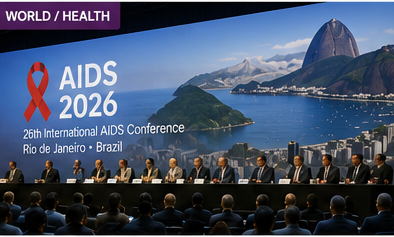
RIO DE JANEIRO — AIDS 2026 has moved into its main scientific and policy programme with a major focus on making long-acting injectable HIV prevention available beyond clinical trials and wealthier health systems.
The 26th International AIDS Conference is taking place in Rio de Janeiro and online from 26 to 31 July. The World Health Organization is participating in plenary sessions, technical discussions and meetings with governments, donors and communities affected by HIV.
A key session on Monday examined how implementation science could accelerate equitable access to long-acting lenacapavir for HIV prevention. The meeting was organised by WHO, Unitaid and the Gates Foundation and focused on translating early country experience into policy and practical service-delivery models.
Lenacapavir can be administered twice a year as pre-exposure prophylaxis, commonly known as PrEP. This long duration could benefit people who find daily tablets difficult because of stigma, privacy concerns, travel, unstable living conditions or inconsistent access to health services.
However, clinical effectiveness alone will not guarantee public-health impact. Countries must determine who will administer injections, where services will be provided, how people will be reminded to return and how national programmes will finance procurement.
Health systems will also need reliable supply chains, trained workers, secure record keeping and safeguards protecting confidentiality. Community organisations should be involved in designing programmes because they often understand barriers affecting people who experience discrimination, criminalisation or exclusion from conventional services.
WHO is also presenting updated recommendations on HIV and sexually transmitted infection prevention, diagnosis, treatment and monitoring. These include guidance on long-acting treatment, HIV PrEP, doxycycline post-exposure prophylaxis and stronger national surveillance systems.
The conference is taking place during what WHO describes as an unprecedented HIV-funding crisis. Reductions in international financing risk weakening prevention programmes, testing, treatment continuity and community-led services.
Patient choice must remain central. Long-acting injections should expand available options rather than replace oral PrEP, condoms or other proven prevention methods.
The central question at AIDS 2026 is therefore not only whether lenacapavir works, but whether governments, manufacturers and donors can make it affordable and accessible at the scale required.
Source: International AIDS Society; WHO
Corrections & updates
- Marked as a developing story
This report is being updated as verified information arrives.
Jul 27, 2026, 11:38 AM - Story published
Verified against the sources cited in this report.
Jul 27, 2026, 6:38 AM
Related stories

AIDS 2026 Opens in Rio Amid Severe Pressure on Global HIV Funding
The world's largest HIV conference has opened in Brazil as researchers, governments and community organisations confront major funding reductions and assess progress towards the 2030 global targets.
WHO Calls for Integrated Services to Restore Progress Against HIV, Hepatitis and STIs
A new WHO assessment says the world remains off track for the 2030 targets and calls for integrated care, stronger surveillance, sustained financing and community leadership.

WHO Introduces New Regulatory Path to Speed Access to Safe Medical Devices
A new interim list of trusted medical-device regulators is designed to help countries rely on established assessments and reduce unnecessary duplication.