AIDS 2026 Opens in Rio Amid Severe Pressure on Global HIV Funding
The world's largest HIV conference has opened in Brazil as researchers, governments and community organisations confront major funding reductions and assess progress towards the 2030 global targets.
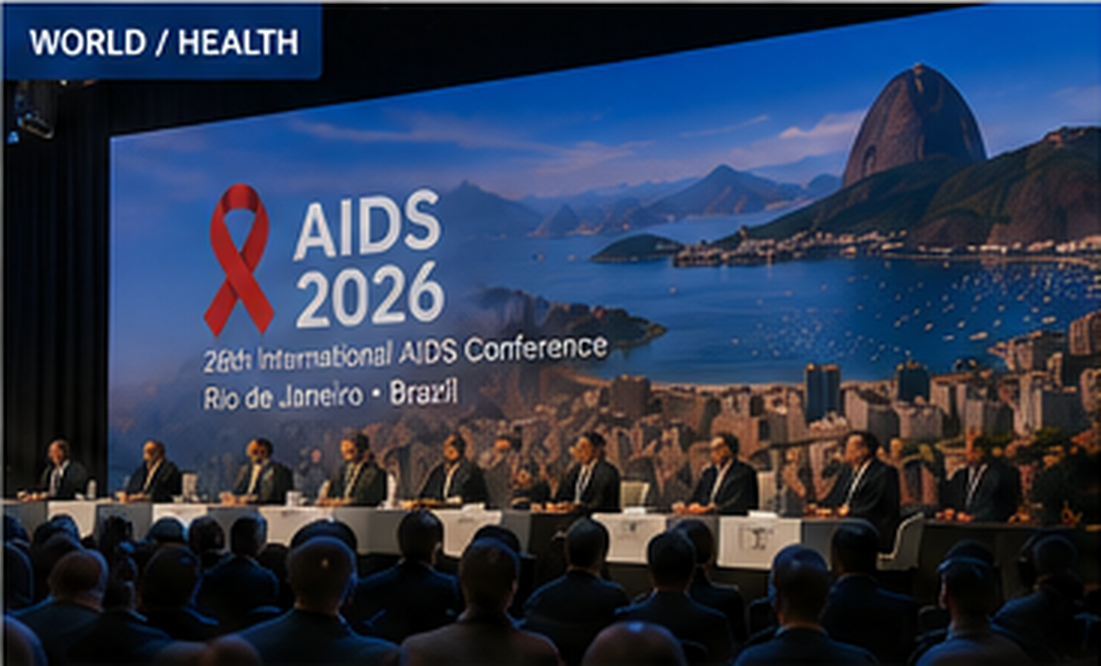
RIO DE JANEIRO — The 26th International AIDS Conference has opened in Rio de Janeiro at a critical moment for the global response to HIV.
AIDS 2026 is taking place from 26 to 31 July at the Riocentro Convention and Event Center and through online participation. Pre-conference meetings began on Sunday ahead of the formal opening ceremony and main scientific programme.
The conference is being held under the theme "Rethink. Rebuild. Rise." Organisers say it reflects the need to protect scientific progress and rebuild services affected by an unprecedented HIV financing crisis and major programme cutbacks.
Up to 10,000 people are expected to participate, including people living with HIV, researchers, healthcare professionals, policymakers, donors, journalists and community organisations. The conference is intended to bring scientific research, policy discussions and lived experience into the same international forum.
Scientific advances have transformed HIV into a manageable long-term condition for people who can obtain testing, treatment and continuing care. By the end of 2024, AIDS-related deaths had declined by 54 per cent and new HIV acquisitions by 40 per cent compared with 2010, according to the International AIDS Society.
However, that progress remains uneven and vulnerable. Reduced international funding has already disrupted some prevention, testing, treatment and community programmes, while many national health systems face pressure to replace declining external support with domestic financing.
The World Health Organization will use AIDS 2026 to present the first global mid-term assessment of progress under international health-sector strategies covering HIV, viral hepatitis and sexually transmitted infections. The assessment will identify achievements, major gaps and actions needed to return the world to the path towards the 2030 targets.
WHO will also present updated recommendations on HIV and sexually transmitted infection prevention, diagnosis, treatment, monitoring and surveillance. Planned discussions include guidance on doxycycline post-exposure prophylaxis and improved use of national HIV data.
The programme will examine how HIV services can become simpler, more integrated and more accessible. Areas of discussion include self-care, community-led services, primary healthcare and the practical use of digital technology and artificial intelligence.
Community organisations are likely to be central to the funding debate. These groups often provide trusted services to people experiencing stigma, discrimination, criminalisation, poverty or geographical isolation. Cuts affecting those programmes may leave vulnerable populations disconnected from prevention and treatment.
The conference will also focus on scientific innovation, including longer-acting prevention tools, new treatment options, vaccine research and efforts towards sustained remission or a cure. However, organisers emphasise that innovation must be accompanied by affordability and equitable access.
AIDS 2026 is taking place four years before the internationally agreed 2030 deadline. Its lasting importance will depend on whether governments and donors make credible commitments to protect existing services, sustain community leadership and ensure that new scientific tools reach those most at risk.
Corrections & updates
- Story updatedJul 26, 2026, 9:55 PM
- Story published
Verified against the sources cited in this report.
Jul 26, 2026, 6:55 PM
Related stories
AIDS 2026 Focuses on Turning Lenacapavir Breakthrough into Equitable HIV Prevention
Researchers, governments and community organisations are examining how twice-yearly injectable HIV prevention can be introduced affordably and effectively while global programme financing remains under severe pressure.
WHO Calls for Integrated Services to Restore Progress Against HIV, Hepatitis and STIs
A new WHO assessment says the world remains off track for the 2030 targets and calls for integrated care, stronger surveillance, sustained financing and community leadership.
WHO Publishes Consolidated Guidance to Improve HIV Service Delivery
The 50-page document brings together more than a decade of recommendations intended to improve access, continuity, integration and equity in HIV care.