UK Household Borrowing Grows at Fastest Annual Rate in Nearly Eight Years
Consumer-credit growth reached 9.1% in June, raising questions about whether stronger spending reflects improving confidence or increasing dependence on borrowing.
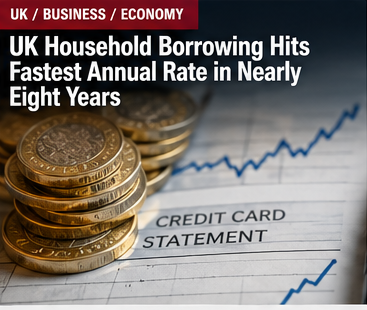
LONDON — UK consumer borrowing expanded at its fastest annual rate since July 2018, according to figures released by the Bank of England.
Net consumer lending increased by £1.807 billion in June, taking the annual growth rate of consumer credit to 9.1%. The monthly increase was higher than economists had expected.
The figures suggest that household spending remained resilient despite elevated living costs and continuing uncertainty over inflation and interest rates.
Retail activity was supported by warm weather and the football World Cup, which increased demand for seasonal clothing, cooling equipment, food and beverages. Retail-sales volumes were reported to be 4.2% higher than a year earlier.
However, stronger borrowing can have more than one interpretation. It may indicate that people feel secure enough about their income to spend more. It may also mean that some households are using credit cards and personal loans because wages and savings are insufficient to meet normal expenditure.
The Bank of England's earlier credit-conditions survey showed that lenders had increased the availability of unsecured credit during the second quarter, although they expected that availability to decline during the following three months.
Mortgage activity also strengthened. Net mortgage lending rose by approximately £7.7 billion, while lenders approved about 58,200 mortgages for house purchases. The lending increase was the strongest since March 2025.
Those figures suggest continued activity in the housing market, but the number of approvals remains sensitive to mortgage rates, household income and expectations about future property prices.
The Bank of England's policy rate currently stands at 3.75%. Inflation remained above the Bank's 2% target, and economists broadly expected policymakers to leave rates unchanged at their July meeting because of uncertainty surrounding energy prices and the wider economy.
Rising consumer borrowing will therefore be monitored carefully. Credit can support spending and economic growth, but rapid debt accumulation can leave households vulnerable if unemployment rises or borrowing costs remain elevated.
Why it matters
The key question is whether the increase represents healthy consumer confidence or growing financial strain. Future evidence on missed payments, credit-card balances and household savings will help clarify the picture.
Corrections & updates
- Story updatedJul 29, 2026, 10:29 PM
- Story published
Verified against the sources cited in this report.
Jul 29, 2026, 9:11 PM
Related stories

UK borrowing costs hit levels not seen since before financial crisis
The ten-year gilt yield closed at 5.378 per cent, tightening the fiscal squeeze ahead of the autumn budget.
Bank of England Holds Interest Rate at 3.75% as Inflation Concerns Intensify
The Bank of England has kept borrowing costs unchanged, but a larger-than-expected minority of policymakers voted for an immediate increase as Middle East tensions and volatile energy prices threaten to push inflation higher.

Tonight's editorial picture: the cost of building faster than we can check
Artificial intelligence, energy and a hillside fire in Bukavu look unrelated. Read together, they describe a world building at a speed its safeguards have not matched.