Bank of England Holds Interest Rate at 3.75% as Inflation Concerns Intensify
The Bank of England has kept borrowing costs unchanged, but a larger-than-expected minority of policymakers voted for an immediate increase as Middle East tensions and volatile energy prices threaten to push inflation higher.
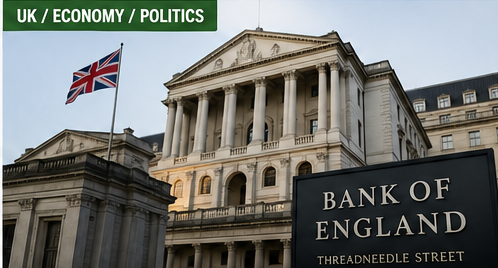
LONDON — The Bank of England has maintained Bank Rate at 3.75%, extending its pause as policymakers assess whether renewed international energy pressures will produce a lasting rise in UK inflation.
The Monetary Policy Committee voted 6–3 to leave the rate unchanged. Economists had broadly expected the decision, but many had anticipated a 7–2 vote. The stronger minority in favour of tightening indicates that concern about inflation is increasing within the committee.
Chief Economist Huw Pill and external members Catherine Mann and Megan Greene supported raising Bank Rate by a quarter percentage point to 4%. They argued that acting earlier could help prevent temporary increases in energy and import costs from spreading into wages, business prices and longer-term inflation expectations.
Governor Andrew Bailey and the majority supported holding the rate. Their position reflects uncertainty about the strength and duration of the external price shock, alongside signs of weaker activity and a loosening labour market. The majority judged that there was not yet enough evidence that higher global costs were creating persistent domestic inflation.
UK inflation fell to 2.6% in June, but the Bank expects it to rise again as energy costs work through household bills, transport and business supply chains. Its latest projection indicates that inflation could reach approximately 3.2% later in 2026, remaining above the official 2% target.
For mortgage borrowers, the decision avoids an immediate increase in Bank Rate, although lenders may still adjust fixed-rate products in response to government-bond yields and expectations about future policy. Savers are likely to continue receiving comparatively elevated deposit rates, while businesses still face financing costs significantly above the levels seen before the recent inflation cycle.
Financial markets reacted moderately. Short-dated government-bond yields fell after the announcement, while sterling moved only slightly. Investors nevertheless continued to price the possibility of a rate increase later in the year if inflation proves more persistent than expected.
The decision offers households temporary stability rather than evidence that borrowing costs will soon fall. Future policy will depend heavily on energy markets, wage growth, services inflation, unemployment and the Government’s forthcoming fiscal plans.
Corrections & updates
- Story updatedJul 30, 2026, 3:02 PM
- Story published
Verified against the sources cited in this report.
Jul 30, 2026, 2:36 PM
Related stories
UK borrowing costs hit levels not seen since before financial crisis
The ten-year gilt yield closed at 5.378 per cent, tightening the fiscal squeeze ahead of the autumn budget.

ECB raises interest rates to 2.5% as energy shock revives inflation fears
The European Central Bank lifted its deposit rate by a quarter point, citing renewed energy costs feeding through to core prices across the euro area.

Tonight's editorial picture: the cost of building faster than we can check
Artificial intelligence, energy and a hillside fire in Bukavu look unrelated. Read together, they describe a world building at a speed its safeguards have not matched.