UK economy grows 0.4% as computer programming and AI-related activity surge
July GDP beat forecasts of no growth, with the ONS pointing to computer-programming businesses benefiting from the AI boom.
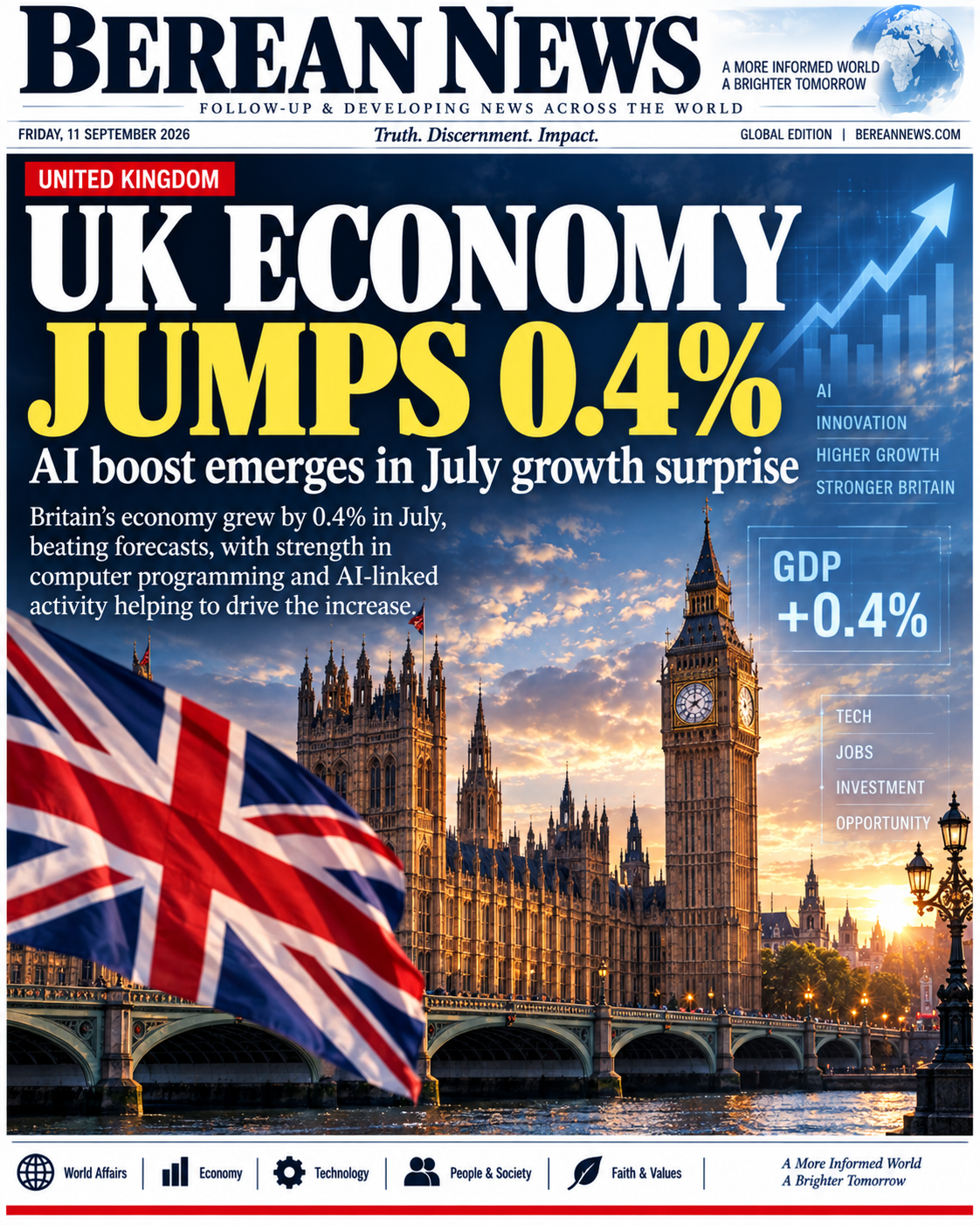
LONDON — Britain's economy unexpectedly expanded by 0.4% in July, dramatically beating forecasts for no growth and providing fresh evidence that activity linked to artificial intelligence and computer programming is beginning to make a measurable contribution to national economic output.
Official figures reported by Reuters showed GDP was 1.6% higher than a year earlier, Britain's strongest annual growth rate since February 2025 and well above economists' 1.2% forecast. GDP also grew 0.4% across the three months to July.
The services sector was the main engine of growth. Office for National Statistics economic statistics director Liz McKeown said much of the recent three-month increase appeared to be coming from computer-programming businesses benefiting from the AI boom. Computer programming again made the largest contribution to service-sector growth in July. Activity around the men's football World Cup and unusually warm weather provided additional support to some businesses.
Britain's economy expanded by 1% during the first half of 2026, the fastest performance among G7 economies, although some economists warn that seasonal-adjustment effects could be exaggerating part of the strength.
Finance Minister John Healey described the figures as evidence of resilience while warning that the economy remains fragile. That caution is understandable: the same week that Britain produced stronger growth figures, global oil prices rose above $100, government borrowing costs reached multi-decade highs and markets increased expectations of future Bank of England rate increases.
The Bank had previously forecast approximately 1.1% economic growth for 2026, although Governor Andrew Bailey has acknowledged that recent data have been somewhat stronger than expected. At the same time, the Bank expects inflation to climb toward 3.2% later this year as higher energy prices work through the economy.
The bigger technology story is notable: artificial intelligence is increasingly moving beyond company announcements, investment rounds and data centres into official economic statistics.
The question now is whether those productivity gains can persist and spread across the wider economy rather than remaining concentrated among technology firms.
Berean News Priority: HIGH
Corrections & updates
- Story updatedSep 11, 2026, 12:22 PM
- Story published
Verified against the sources cited in this report.
Sep 11, 2026, 11:25 AM
Related stories

English mayors to receive powers to impose overnight visitor levy
The levy will be charged as a percentage of accommodation cost, with local authorities deciding whether to introduce it.

RNLI reviews security after volunteers targeted during migrant-related protests
Volunteers faced online abuse and threats after an operation near Portsmouth, with some photographs circulated alongside false accusations.

MPs reject assisted dying bill by 286 to 270
The Commons voted 286 against and 270 in favour, leaving the existing prohibition in England and Wales unchanged.