UK Bluetongue Cases Rise to 24 as Livestock Farmers Are Urged to Remain Vigilant
Twenty-one BTV-3 cases have been confirmed in England and three in Wales since the start of July, prompting renewed advice on vaccination, animal movements and rapid reporting.
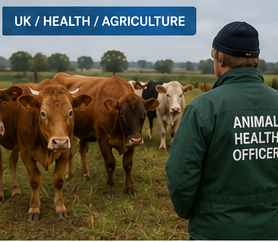
LONDON — The number of confirmed bluetongue cases in the United Kingdom has risen to 24 during the 2026–27 outbreak season, according to the latest government update.
Since 1 July, 21 cases of bluetongue virus serotype 3 have been confirmed in England and three in Wales. No cases have been reported in Scotland or Northern Ireland during the current season.
Two additional cases were confirmed in England on 23 July following reports of suspicious clinical signs. One affected bovine animal displayed symptoms including fever, lethargy, unsteady movement, drooling and a small mouth ulcer.
Bluetongue is a viral disease affecting ruminants such as cattle, sheep, goats and deer. It is transmitted mainly by biting midges rather than through direct animal-to-animal contact.
The disease does not affect people and presents no known food-safety risk. However, it can cause serious illness in livestock and may lead to production losses, movement restrictions and additional costs for farmers.
Symptoms can vary between species and individual animals. Farmers are advised to watch for fever, swelling of the head or mouth, mouth lesions, excessive salivation, lameness, breathing problems, reduced milk production and reproductive difficulties.
The Department for Environment, Food and Rural Affairs funds diagnostic testing for up to three affected animals where suspicious clinical signs are reported. Livestock keepers are legally required to report suspected cases promptly.
Vaccination is an important part of the control strategy, alongside biosecurity and compliance with livestock identification and movement rules. Farmers should consult veterinary professionals about appropriate vaccination and risk-management plans for their animals.
The current figures remain below the 2025–26 season, when 348 cases were confirmed in Great Britain. However, seasonal midge activity means the situation can change as temperatures and weather conditions develop.
Movement restrictions may apply to affected premises, and animals transported from higher-risk areas may require additional checks or conditions. Farmers should consult the latest official guidance before moving livestock or animal products.
The economic impact can extend beyond an individual farm. Disease restrictions may affect breeding, sales, exports and seasonal livestock movements. Rapid detection is therefore important for both animal welfare and the wider agricultural sector.
Corrections & updates
- Story updatedJul 26, 2026, 6:56 AM
- Story published
Verified against the sources cited in this report.
Jul 26, 2026, 5:45 AM
Related stories
UK air-traffic chaos and 2,000 flight cancellations blamed on NATS software defect
NATS chief executive Martin Rolfe said a software defect caused the disruption; safety was not compromised, while Ryanair called for his resignation.
RNLI reviews security after volunteers targeted during migrant-related protests
Volunteers faced online abuse and threats after an operation near Portsmouth, with some photographs circulated alongside false accusations.

MPs reject assisted dying bill by 286 to 270
The Commons voted 286 against and 270 in favour, leaving the existing prohibition in England and Wales unchanged.