Scotch Whisky Returns to Zero-Tariff US Trade as First Digital Shipment Is Prepared
British whisky now enters the United States without sector-specific tariffs, while a digitally documented shipment demonstrates how paperless trade could reduce export delays and costs.
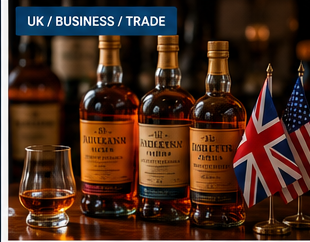
LIVERPOOL — Scotch whisky has returned to zero-tariff access in the United States, with the first shipment under the new arrangement prepared to leave Britain using a fully digital trade-documentation system.
The tariff change took effect on 24 July following an agreement reached during the King’s state visit to the United States in April. The UK Government says whisky and medical technology are now covered by zero-tariff terms under the bilateral economic agreement.
The first whisky shipment was scheduled to depart within 48 hours of the announcement. The limited-edition consignment, known as Atlantic Proof, was prepared through Liverpool and is being managed through the LogChain digital-trade platform without physical paperwork.
Paperless trade systems can replace physical customs, shipping and certification documents with verified electronic records. The Government says this can reduce administrative delays, improve traceability and make export processes quicker and less expensive for businesses.
The United States is the largest export market for Scotch whisky by value. Government figures put UK whisky exports to the US at about £1 billion in 2025, while the Scotch Whisky Association estimated Scotch exports specifically at £933 million. The industry supports employment in distilling, farming, cooperage, transport, hospitality and retail.
The removal of whisky tariffs gives producers greater certainty in a strategically important market. Smaller distillers may particularly benefit if lower trade friction makes it easier to enter the US or expand existing distribution.
However, the wider international tariff environment remains unsettled. New US tariffs on numerous trading partners took effect on 24 July, while the UK Government said its existing agreements remained intact. Trade analysts have warned that Britain could lose some of its relative advantage if European competitors secure more favourable terms in other sectors.
The whisky agreement therefore represents a clear benefit for one industry but does not remove uncertainty facing all British exporters. Companies will continue monitoring customs treatment, exchange rates, transport costs and the competitive position of products from other countries.
The digital shipment will also test whether electronic documentation delivers the promised efficiency in normal commercial operations. A successful journey could encourage wider adoption across food, drink and other export sectors.
For Scotch producers, zero-tariff access removes a direct barrier in their most valuable market. The longer-term impact will depend on whether it leads to higher sales, sustained investment and broader opportunities for small and independent distilleries.
Corrections & updates
- Story updatedJul 26, 2026, 6:56 AM
- Story published
Verified against the sources cited in this report.
Jul 26, 2026, 5:30 AM
Related stories
US delay on $14 billion Taiwan arms package raises questions before Trump–Xi meeting
Anduril founder Palmer Luckey says delays in US approvals are affecting business as tensions over Taiwan continue and a Trump–Xi meeting is expected next week.

America marks 25 years since 9/11 with memorials and a new moment of silence
Ceremonies at Ground Zero, the Pentagon and Shanksville remembered nearly 3,000 people killed, with a seventh moment of silence added for those who later died of 9/11-related illnesses.
Trump reportedly rejects Saudi request for direct US strikes on Houthis
Saudi Crown Prince Mohammed bin Salman reportedly asked President Donald Trump twice to strike Houthi forces. Reuters carried the Axios report but could not independently verify it.