China Threatens Countermeasures as US–China AI Dispute Escalates
Beijing has rejected allegations that Chinese developers improperly copied an American artificial-intelligence model and has warned it may respond to sanctions or trade restrictions.
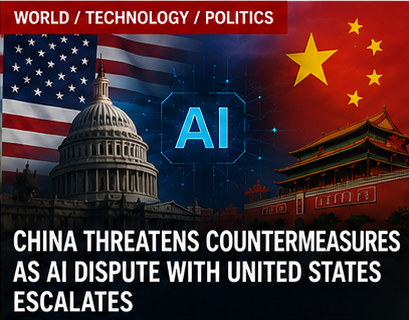
BEIJING — China has accused the United States of pursuing what it called "AI hegemonism" and warned that it may take countermeasures if Chinese artificial-intelligence companies face investigations, sanctions or trade restrictions.
The dispute centres on allegations that Beijing-based Moonshot AI used a process known as model distillation to reproduce capabilities from an advanced American AI model without permission. US officials have suggested that investigations or restrictions could follow if intellectual-property violations are confirmed.
Model distillation is a technical process through which a smaller model learns from the outputs of a larger one. It is widely used legitimately, but legal questions can arise depending on how access was obtained, the conditions governing use and whether protected intellectual property was misappropriated.
US allegations concern Moonshot AI's Kimi K3 model and alleged use of outputs from an Anthropic system. Moonshot has denied wrongdoing and says its progress resulted from original changes to model architecture.
China's Ministry of Commerce said the threatened measures lacked factual and legal grounds and warned that Beijing would take steps to protect Chinese companies and national interests.
Possible US actions mentioned in reporting include investigations, sanctions and the addition of Chinese companies to trade-restriction lists. No final finding of intellectual-property theft has yet been reported.
The dispute forms part of a wider contest over advanced semiconductors, cloud computing, model development, export controls and national-security concerns.
The United States has restricted access to some high-performance chips and manufacturing equipment, while China has accelerated efforts to develop domestic computing infrastructure and AI ecosystems.
Supporters of tighter controls argue that advanced AI and semiconductors have security implications. Critics warn that escalating restrictions could fragment global research, increase costs and encourage further technological separation.
The facts behind the specific allegations will require evidence from formal investigations. News reporting should continue distinguishing between US claims, Moonshot's denial and confirmed government action.
The broader risk is that the disagreement develops from a dispute involving one company into a wider cycle of technology restrictions and retaliation affecting researchers, suppliers and businesses in both countries.
Source attribution: Reuters and China's Ministry of Commerce.
Corrections & updates
- Story updatedJul 28, 2026, 8:02 AM
- Story published
Verified against the sources cited in this report.
Jul 28, 2026, 7:30 AM
Related stories

Russian Soviet-era film screening in Taipei alarms Taiwan
A private screening for around 20 people has become a geopolitical controversy as Taiwanese officials point to a broader information campaign.
Xi–Modi meeting being arranged as BRICS summit opens new diplomatic test
China's foreign ministry says a bilateral meeting is being arranged during the New Delhi summit; it has not yet taken place.
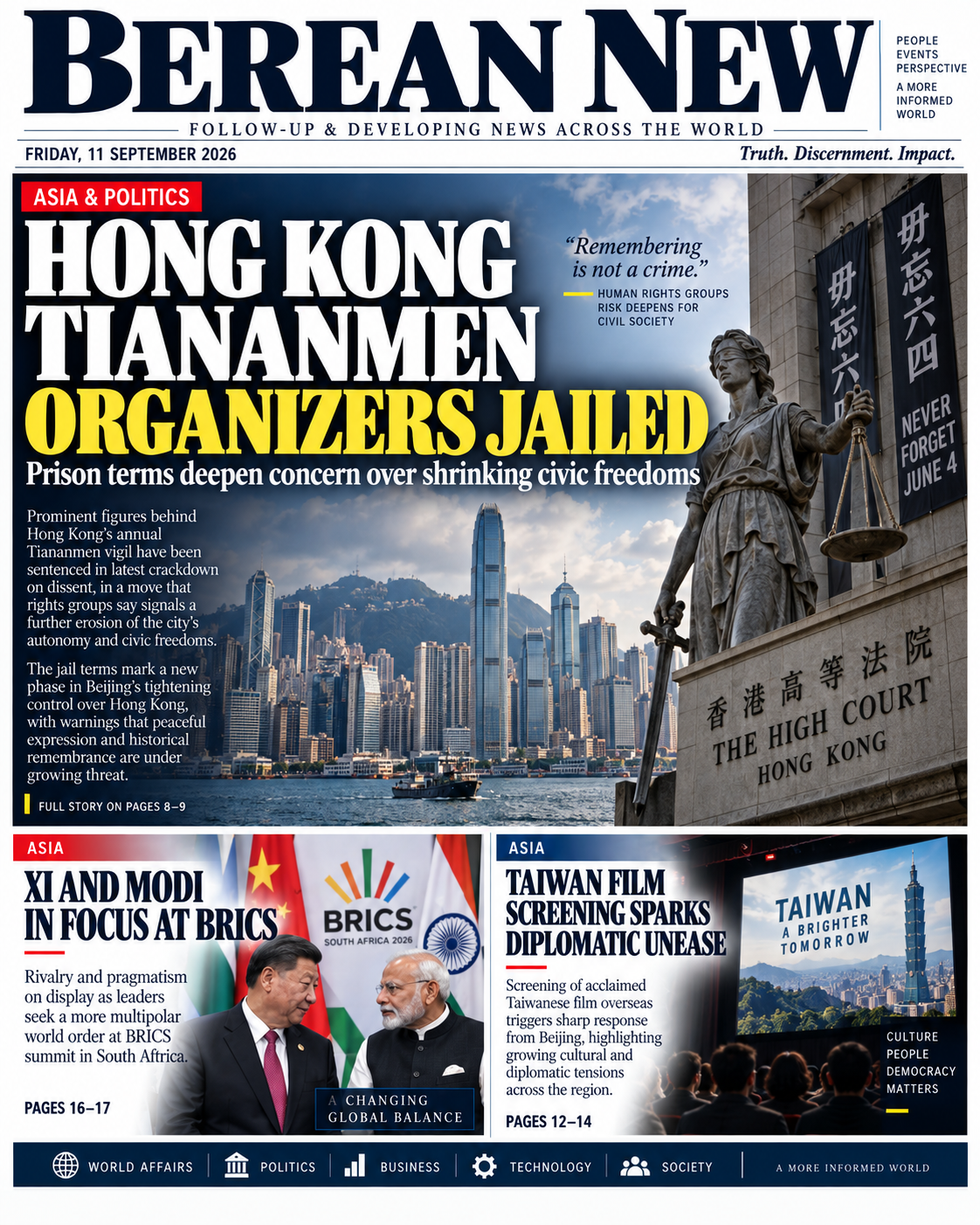
Hong Kong jails Tiananmen vigil leaders under national security law
Lee Cheuk-yan was sentenced to seven years and Chow Hang-tung to seven years and three months for inciting subversion.