Pan-African Parliament Opens New Legislature with Water and Accountability Agenda
African legislators meeting in Midrand are being urged to turn continental commitments on water, sanitation, trade and governance into funded national programmes and measurable improvements.
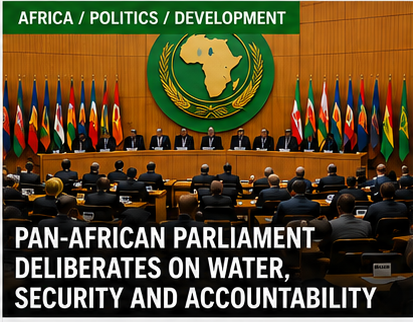
MIDRAND — The Pan-African Parliament has opened the First Ordinary Session of its Seventh Legislature with calls for stronger oversight, deeper continental integration and practical action on water and sanitation.
The formal session began on 27 July at the Parliament's headquarters in Midrand, South Africa, following preparatory meetings and committee work held earlier in the month.
South African President Cyril Ramaphosa told members that the institution represents the democratic voice of more than 1.5 billion Africans. He urged legislators to translate the African Union's Agenda 2063 into visible improvements in people's lives rather than measuring success only by resolutions and declarations.
Water and sanitation are central to the proceedings under the African Union's 2026 Theme of the Year. The Parliament has been examining legislation, budgetary oversight, infrastructure investment and accountability measures needed to improve sustainable water access and safe sanitation.
Access to clean water affects health, education, agriculture, food security and economic productivity. Communities without reliable sanitation face increased risks of disease, while women and girls often spend significant time collecting water, limiting educational and economic opportunities.
Ramaphosa called for stronger legislation, greater investment and enhanced parliamentary oversight. He also urged member states to support deeper continental integration and accelerate implementation of the African Continental Free Trade Area.
The session is also considering peace and security, governance, trade, economic integration, gender equality and youth development. Permanent committees prepared reports on these issues before the plenary opened.
A continuing institutional question concerns the Parliament's authority. Ramaphosa renewed calls for ratification of the Malabo Protocol, which would strengthen the body's legislative mandate. Without broader ratification, many of its recommendations remain dependent on national governments and legislatures for implementation.
The practical measure of success will be whether national parliaments adopt funded laws, require transparent reporting and hold executives accountable for delivering services.
A declaration supporting water access will have little effect unless it leads to functional boreholes, treatment systems, sanitation facilities, maintenance budgets and reliable service in homes, schools and health centres.
The new legislature therefore begins with an ambitious agenda and a clear test: whether continental parliamentary debate can produce measurable national action.
Source attribution: Pan-African Parliament and African Union.
Corrections & updates
- Story updatedJul 28, 2026, 8:02 AM
- Story published
Verified against the sources cited in this report.
Jul 28, 2026, 7:33 AM
Related stories
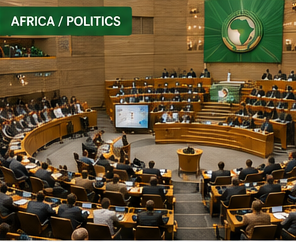
Pan-African Parliament Prepares to Open First Ordinary Session of Seventh Legislature
Parliamentarians from across Africa will meet in Midrand to consider water and sanitation, peace and security, trade, regional integration, gender and youth affairs.
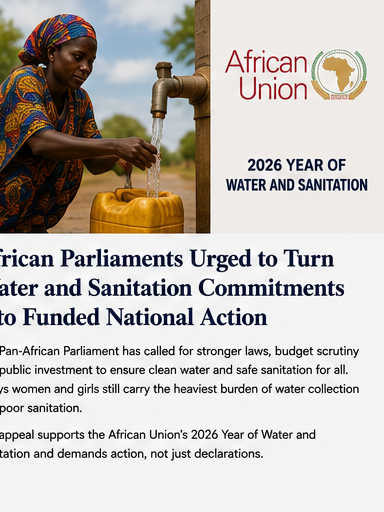
African Parliaments Urged to Fund Clean Water and Safe Sanitation
The Pan-African Parliament says continental water and sanitation commitments must be converted into stronger laws, public investment and accountable national programmes.
African Union Concludes Ministerial Session but Detailed Decisions Remain Unpublished
Foreign ministers discussed water, sanitation and delivery of Agenda 2063, but the final public record of adopted commitments had not appeared on the African Union’s website by the time of publication.