African Parliaments Urged to Fund Clean Water and Safe Sanitation
The Pan-African Parliament says continental water and sanitation commitments must be converted into stronger laws, public investment and accountable national programmes.
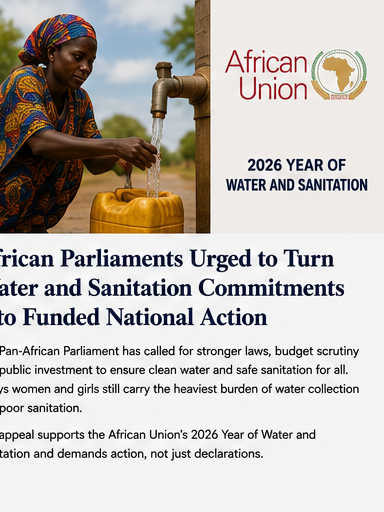
MIDRAND — African parliaments have been urged to strengthen legislation, financing and government oversight to improve access to clean water and safe sanitation across the continent.
The call followed a high-level workshop organised by the Pan-African Parliament in Midrand, South Africa. The meeting focused on the African Union’s 2026 Theme of the Year: “Assuring Sustainable Water Availability and Safe Sanitation Systems to Achieve the Goals of Agenda 2063.”
Members from five parliamentary committees examined how continental commitments could be translated into national legislation, budget allocations and public-service programmes.
The workshop emphasised that parliaments have four central responsibilities: passing effective laws, approving sufficient budgets, scrutinising government performance and representing communities that continue to lack reliable services.
Access to water and sanitation affects public health, food production, education, environmental sustainability and economic development. Schools and healthcare facilities cannot operate safely without dependable water and functioning toilets, while contaminated water increases exposure to preventable diseases.
Participants highlighted the disproportionate burden placed on women and girls in many rural communities, where responsibility for collecting water may consume hours each day and limit opportunities for education, paid employment and community participation.
Climate change, urban growth, drought and ageing infrastructure are placing additional pressure on water systems. Governments must therefore invest not only in constructing new facilities but also in maintenance, water-resource protection, monitoring and local technical capacity.
Parliamentary oversight is particularly important because infrastructure projects may be announced without adequate funding for long-term operation. Legislatures can require ministries to publish targets, disclose spending and report regularly on whether services are reaching underserved communities.
The Pan-African Parliament called for stronger political commitment, increased public investment and greater cooperation between African Union institutions, member states and development partners.
The workshop formed part of preparations for the First Ordinary Session of the Pan-African Parliament’s Seventh Legislature, scheduled from 27 July to 1 August 2026.
The policy commitments are already established. The decisive issue is whether governments and legislatures will provide the financing, oversight and institutional capacity needed to deliver safe water and sanitation to households, schools and health facilities.
Corrections & updates
- Story updatedJul 25, 2026, 8:53 AM
- Story published
Verified against the sources cited in this report.
Jul 25, 2026, 6:00 AM
Related stories
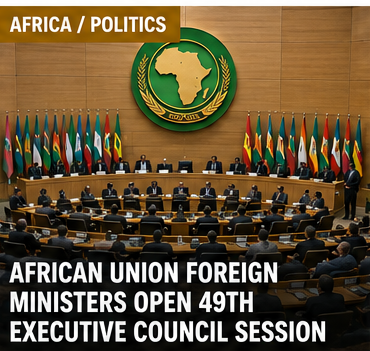
African Union Foreign Ministers Open 49th Executive Council Session in Addis Ababa
The two-day meeting is being held under the African Union's water-and-sanitation theme and will prepare decisions requiring coordination among member states, the AU Commission and regional organisations.
African Union Concludes Ministerial Session but Detailed Decisions Remain Unpublished
Foreign ministers discussed water, sanitation and delivery of Agenda 2063, but the final public record of adopted commitments had not appeared on the African Union’s website by the time of publication.
African Union Ministers Conclude Talks on Water, Sanitation and Agenda 2063
Foreign ministers have spent two days reviewing continental priorities, with pressure mounting for declarations to be matched by funding, deadlines and national implementation.