Hormuz Crisis Deepens: Oil Prices Climb as Gulf Slicks Raise Environmental Alarm
Tanker attacks, severely disrupted shipping and US–Iran confrontation are now being accompanied by mounting evidence of environmental damage across Gulf waters.
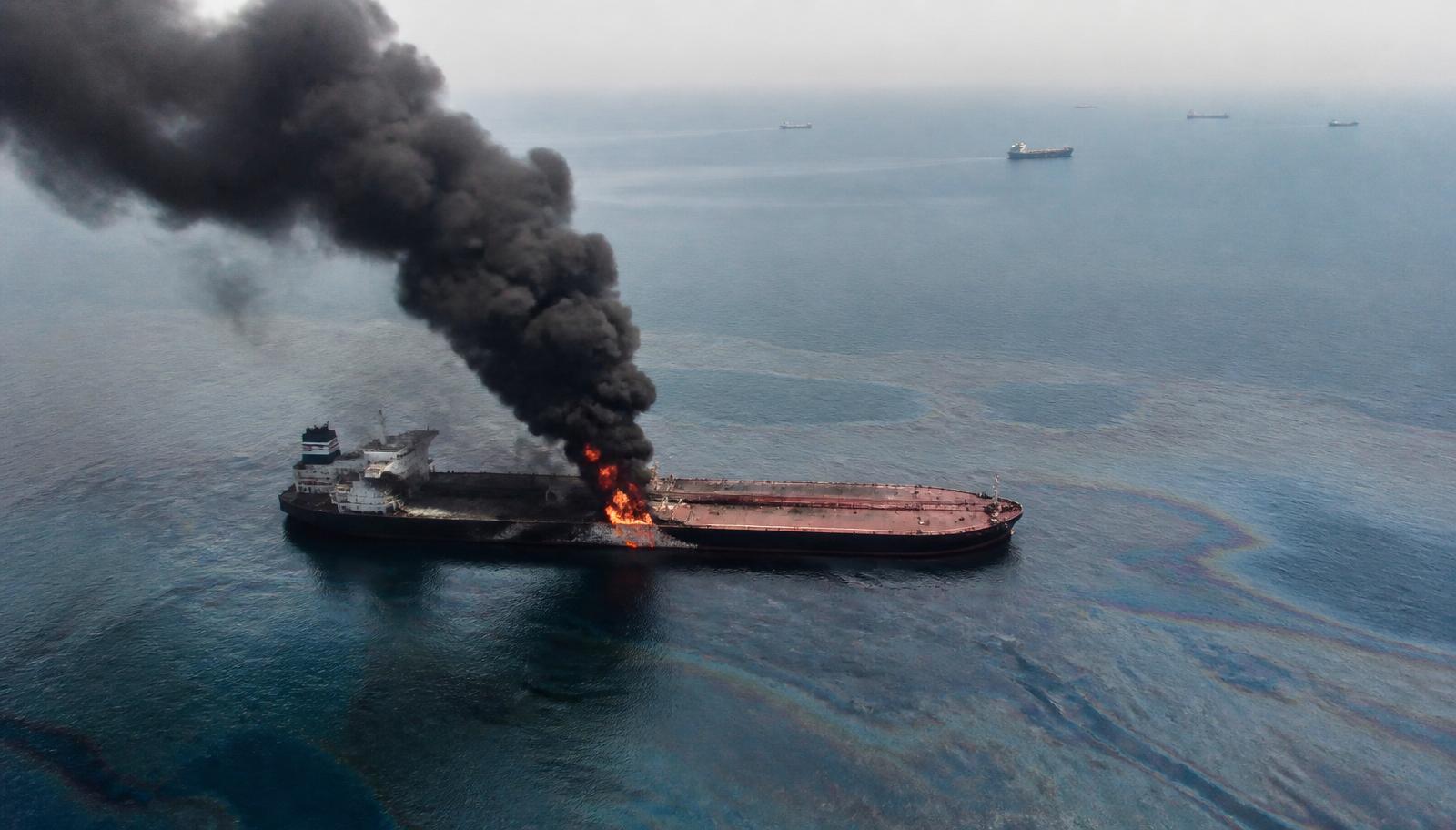
The crisis surrounding the Strait of Hormuz has taken another dangerous turn, with rising oil prices and newly documented oil slicks transforming what was already a military and shipping emergency into a potentially serious environmental crisis.
Satellite imagery and video verified by Reuters show two slicks in Iranian waters, while a separate and much larger oil spill off Oman threatens sensitive coastal ecosystems.
At the same time, international oil prices moved higher on Friday as traders weighed tanker attacks, severely restricted shipping through Hormuz and uncertainty surrounding the confrontation between Iran and the United States.
Brent crude rose to approximately $88.52 a barrel, while US West Texas Intermediate traded around $82.40 in the Reuters reporting period.
That puts Brent on course for a weekly gain of approximately 5.1%, while WTI has gained around 4.4%.
The numbers are significant because they show that geopolitical developments in the Gulf are increasingly translating into measurable economic consequences.
But the latest developments go considerably further than the price of oil.
## Two slicks detected in Iranian waters
Reuters reports that satellite imagery has revealed two slicks in Iranian waters.
One is located near the southern end of Qeshm Island, close to the Strait of Hormuz.
The pollution is believed to be associated with the Liberia-flagged bulk carrier Minoan Pioneer, which was struck by an unidentified projectile on 3 August.
The vessel was carrying fuel for its own operations rather than transporting a cargo of crude oil.
Nevertheless, the environmental consequences appear significant.
Reuters reports that the spill includes heavy fuel oil as well as a much longer, lighter slick extending for more than 160 kilometres.
Heavy fuel oil presents a particular environmental challenge because it can persist in marine environments and contaminate shorelines.
Oil reaching beaches, mangroves and shallow coastal waters can damage habitats and threaten fish, seabirds and other marine species.
A second slick has also been detected near Sirri Island, another Iranian island in the Gulf that is associated with offshore oil and gas infrastructure.
Investigations are continuing into the source and scale of that pollution.
The existence of two slicks illustrates an increasingly serious problem: attacks and accidents involving commercial vessels can create environmental consequences long after the immediate security incident has ended.
## A much larger disaster is developing off Oman
Separate from the incidents in Iranian waters, another major spill is developing off the coast of Oman.
The tanker Caroline Bezengi, which had been carrying Russian crude, grounded off Oman after an earlier incident and has been leaking oil.
Reuters reports that the resulting slick has spread across an area potentially approaching 2,000 square kilometres.
That makes the Omani incident considerably larger than the pollution currently being documented near Qeshm Island.
Oil has threatened environmentally sensitive areas, increasing concern about damage to marine ecosystems and coastal communities.
Cleanup operations are particularly difficult because oil at sea does not remain stationary.
Wind, currents, waves and weather conditions can spread pollution across enormous distances.
Once oil reaches beaches, wetlands or mangroves, removing it becomes substantially more complicated.
The regional security situation is creating another difficulty.
Emergency responders, salvage operators and environmental teams must work in waters where military confrontation and attacks on shipping remain an active concern.
The Gulf is therefore facing an unusual combination of environmental emergency and geopolitical instability.
## The Qeshm Island question
The precise chain of responsibility for the Qeshm pollution remains contested.
Iran has blamed foreign activity for environmental degradation in the region.
But reporting and maritime tracking assessments have raised questions about whether the slick could instead be associated with the earlier strike on the Minoan Pioneer.
For Berean News, that distinction is important.
Claims about responsibility should therefore remain attributed to the parties making them unless independently verified.
What is independently supported by satellite imagery and verified video is that significant pollution exists in the waters around Qeshm Island.
Determining responsibility is a separate question.
## Oil prices move higher
While environmental concerns increase, international energy markets are responding to the continuing security crisis.
Brent crude rose approximately 0.9% to $88.52 per barrel during Friday trading, according to Reuters.
WTI gained approximately 0.5% to $82.40.
For the week, Brent was up about 5.09%, while WTI had gained approximately 4.37%.
The rise reflects increasing concern about supply disruptions.
Hormuz is one of the world's most strategically important maritime energy corridors.
Before the current disruption, roughly one-fifth of global oil consumption moved through the waterway.
The Strait is also crucial for liquefied natural gas shipments.
Anything that prevents tankers from moving safely through Hormuz therefore has consequences far beyond Iran, the United States or the Gulf states.
## Two ADNOC vessels attacked
The environmental developments follow another escalation in the security crisis.
Two vessels operated by the United Arab Emirates' state energy company ADNOC were attacked while transiting the Strait on Thursday.
The UAE has blamed Iran.
No injuries were reported.
Those attacks reinforced concerns among shipping companies and insurers already confronting an extraordinarily difficult operating environment.
Commercial operators now have to consider not only whether vessels can physically transit the Strait but whether the financial and security risks make doing so commercially viable.
That distinction is crucial.
A maritime route does not have to be formally closed to become effectively unusable for large sections of commercial shipping.
If insurers increase premiums dramatically, crews refuse assignments or companies judge the danger excessive, commercial traffic can collapse even while some vessels continue moving.
## Shipping remains far below normal
Reuters' latest reporting indicates that traffic through Hormuz remains heavily constrained.
Only a small number of vessels are passing compared with the volumes recorded before the current conflict.
The situation therefore remains more accurately described as severely disrupted rather than absolutely closed.
Some ships continue to transit.
Others may operate without transmitting normal tracking information.
But the overall commercial picture is clear: normal shipping conditions have not returned.
## US–Iran confrontation intensifies
Behind the shipping disruption lies the broader confrontation between Washington and Tehran.
The United States has threatened additional economic pressure against Iran and says it can sustain its naval operations for an extended period.
Iran, meanwhile, continues to reject American assertions concerning control of Hormuz.
Tehran has linked unrestricted navigation to wider demands concerning sanctions and frozen assets.
Those positions remain far apart.
The danger is that commercial shipping has effectively become part of the negotiating battlefield.
Every vessel attack therefore carries consequences beyond the ship itself.
It can influence oil prices, insurance premiums, diplomatic negotiations and military calculations.
## Asia looks for alternative oil
The disruption is already changing global trade patterns.
Asian refiners have increased purchases of crude from suppliers outside the Gulf, including the United States.
The logic is straightforward.
If crude from the Persian Gulf becomes difficult or dangerous to transport, refiners must find alternatives.
But alternatives frequently involve longer voyages.
Longer journeys require additional fuel, tanker capacity and insurance.
Those costs eventually become part of the price paid by refiners and consumers.
The crisis could therefore contribute to inflation even in countries thousands of miles from Hormuz.
## Environmental damage changes the story
Until now, much international attention has focused on military confrontation, energy security and shipping.
The emerging oil slicks add another dimension.
Marine ecosystems do not recognise national boundaries.
Pollution originating in one country's waters can move towards another country's coastline.
Fish stocks migrate.
Currents carry contaminants.
Mangrove systems and breeding grounds can be damaged regardless of which government controls the territory where an incident began.
That means environmental cooperation may become necessary even while governments remain politically or militarily opposed.
## Why Qeshm Island matters
Qeshm is located immediately adjacent to the Strait of Hormuz.
Its coastal ecosystems include sensitive marine environments and mangrove areas.
Pollution in this location therefore presents two overlapping concerns.
The first is ecological damage.
The second is strategic.
Environmental cleanup teams may have to operate close to one of the world's most heavily contested shipping corridors.
That makes response operations more difficult and potentially more dangerous.
## The Oman spill could be even more serious
The Caroline Bezengi incident deserves particular international attention because of its scale.
The tanker was carrying a substantial quantity of crude when it became stranded.
The spill has already spread over an enormous maritime area.
If containment efforts fail, currents could transport additional oil towards environmentally sensitive coastlines.
Protected marine areas and wildlife habitats could consequently face long-term consequences.
Oil pollution can affect ecosystems for years after the visible slick disappears.
## What happens next
Five indicators now deserve close monitoring.
First is commercial shipping traffic through Hormuz. A further reduction would indicate that shipowners increasingly regard the route as unacceptable.
Second is oil prices. A sustained move significantly above current levels would indicate markets are pricing in prolonged disruption rather than temporary instability.
Third is additional attacks on commercial vessels.
Fourth is the expansion of the oil slicks and whether pollution reaches additional protected habitats or coastlines.
Fifth is diplomacy.
Any credible agreement guaranteeing commercial navigation could rapidly change both shipping behaviour and market sentiment.
Without such an agreement, every additional incident increases uncertainty.
## Berean News assessment
The Strait of Hormuz crisis has entered a new phase.
What began primarily as a geopolitical and maritime-security confrontation now carries four interconnected risks: military escalation, energy disruption, global economic pressure and environmental damage.
The appearance of oil slicks is especially important because environmental consequences can continue long after military activity stops.
Ships can be repaired.
Oil markets can eventually stabilise.
But damaged mangroves, contaminated coastlines and disrupted marine ecosystems can take years to recover.
The international community therefore faces a widening challenge.
Preventing further attacks on commercial shipping is no longer simply about keeping oil moving.
It is increasingly about preventing a strategic waterway from becoming both an economic chokepoint and an environmental disaster zone.
## At a glance
- Brent crude: approximately $88.52 a barrel - WTI crude: approximately $82.40 a barrel - Weekly movement: Brent approximately +5.1%; WTI approximately +4.4% - Qeshm: satellite imagery shows a significant slick near the Iranian island - Second Iranian slick: detected near Sirri Island - Oman: a separate major spill from the Caroline Bezengi threatens coastal ecosystems - Security: two ADNOC-operated vessels were attacked Thursday; the UAE blamed Iran - Shipping: Hormuz commercial traffic remains severely restricted - Status: DEVELOPING
Source attribution: Reuters environmental, energy and Middle East reporting, 14 August 2026. Satellite imagery and video cited by Reuters were used to verify key environmental developments.
Corrections & updates
- Marked as a developing story
This report is being updated as verified information arrives.
Aug 27, 2026, 1:52 PM - Story published
Verified against the sources cited in this report.
Aug 14, 2026, 5:15 PM
Related stories
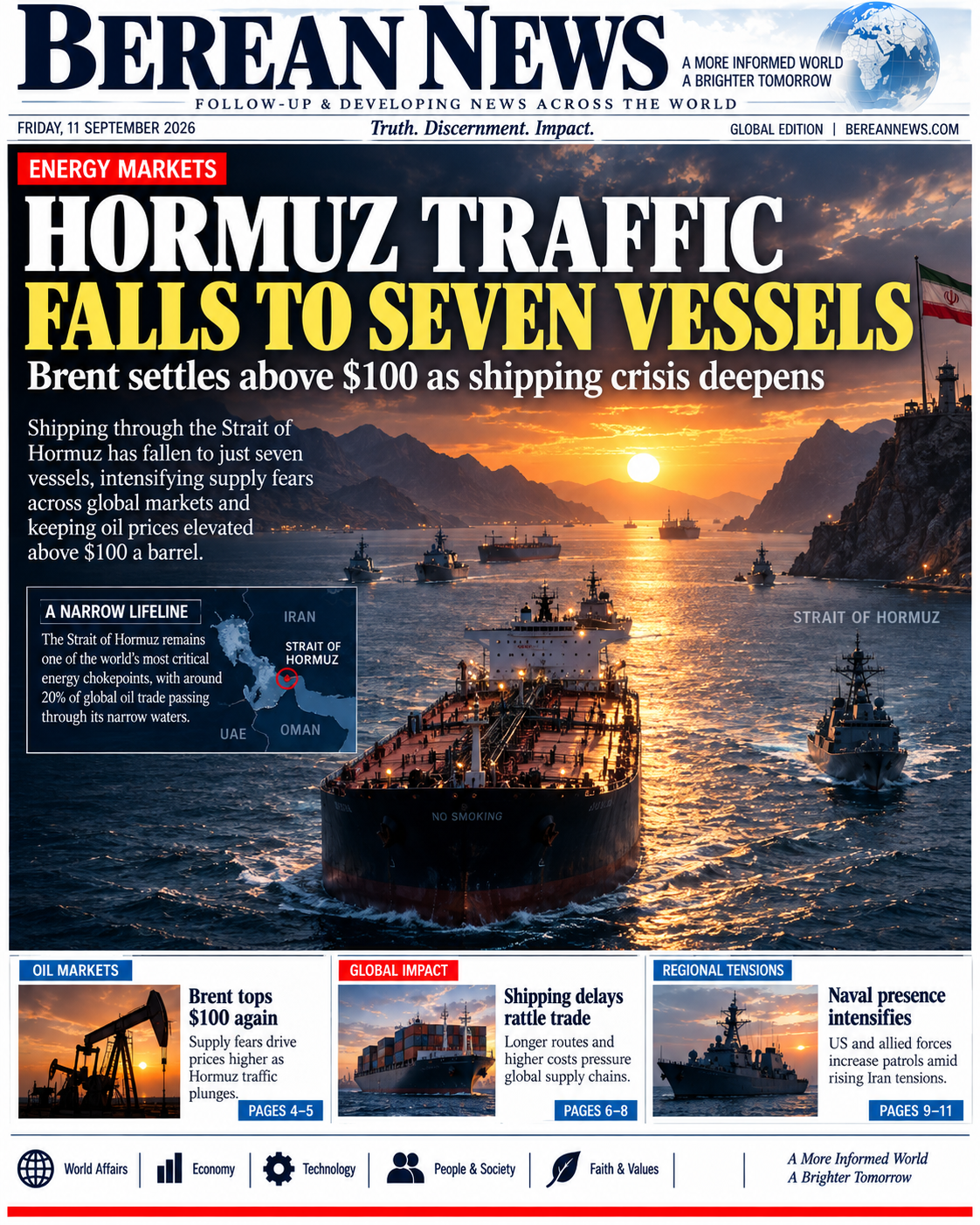
Hormuz traffic falls to seven vessels as oil remains above $100
Only seven transits were recorded on Thursday. Brent traded around $104.18 on Friday morning, heading for a weekly gain of more than 8%.
Hormuz Crisis Deepens as Shipping Slows and Oil Prices Rise
Only five commodity vessels crossed the Strait on Saturday and none on Sunday, tracking data shows, as Brent crude holds near the high $80s.
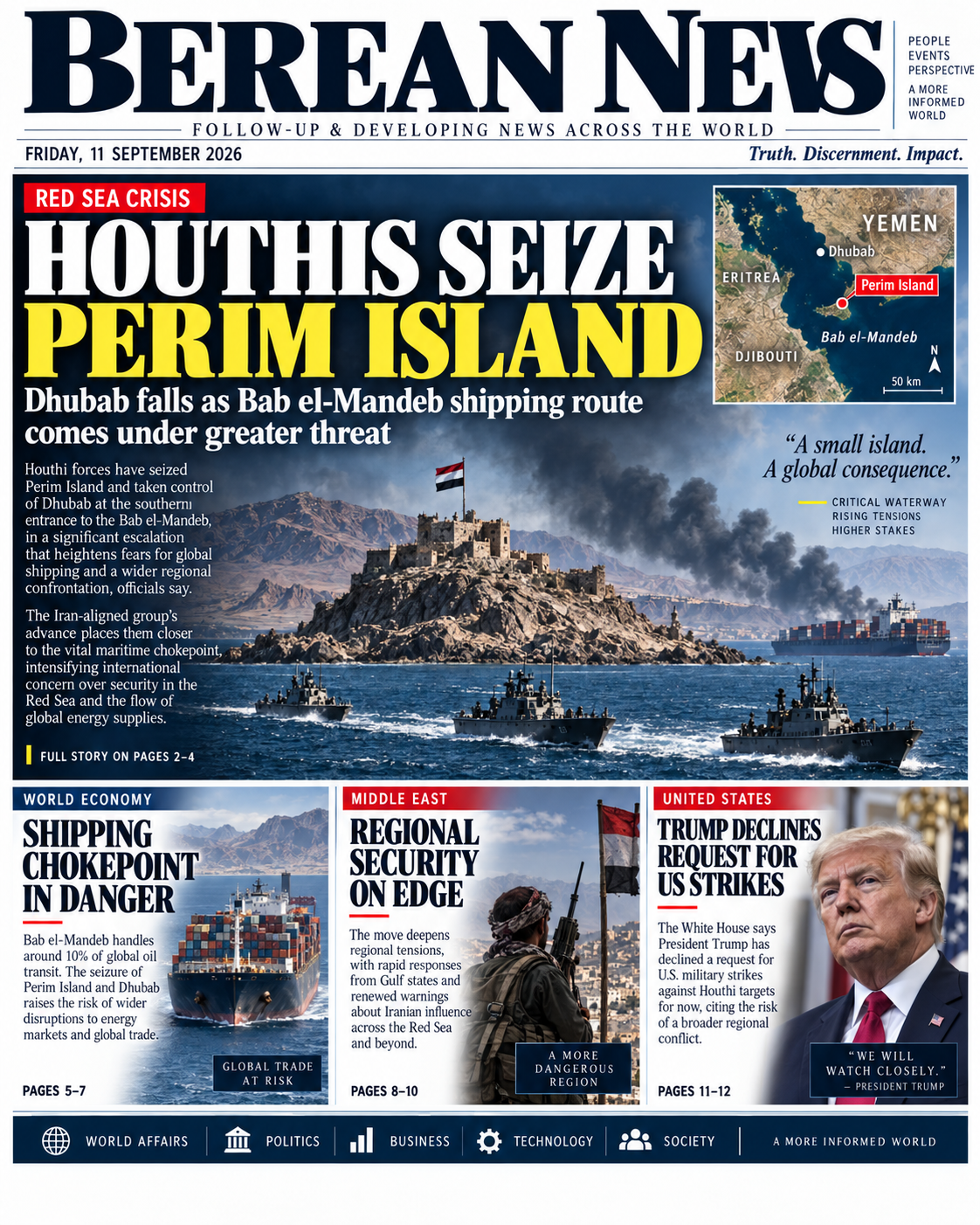
Houthis seize Perim Island and Dhubab as Bab el-Mandeb crisis escalates
Yemen's Iran-aligned Houthi movement has seized the strategically important Perim Island and the mainland town of Dhubab at the southern entrance to the Red Sea.