Nigeria’s Christian and Muslim Leaders Sign Peace Accord and Form New Interfaith Body
More than 50 senior clerics signed an accord in Abuja creating a body to confront extremism, hate speech and divisive rhetoric.
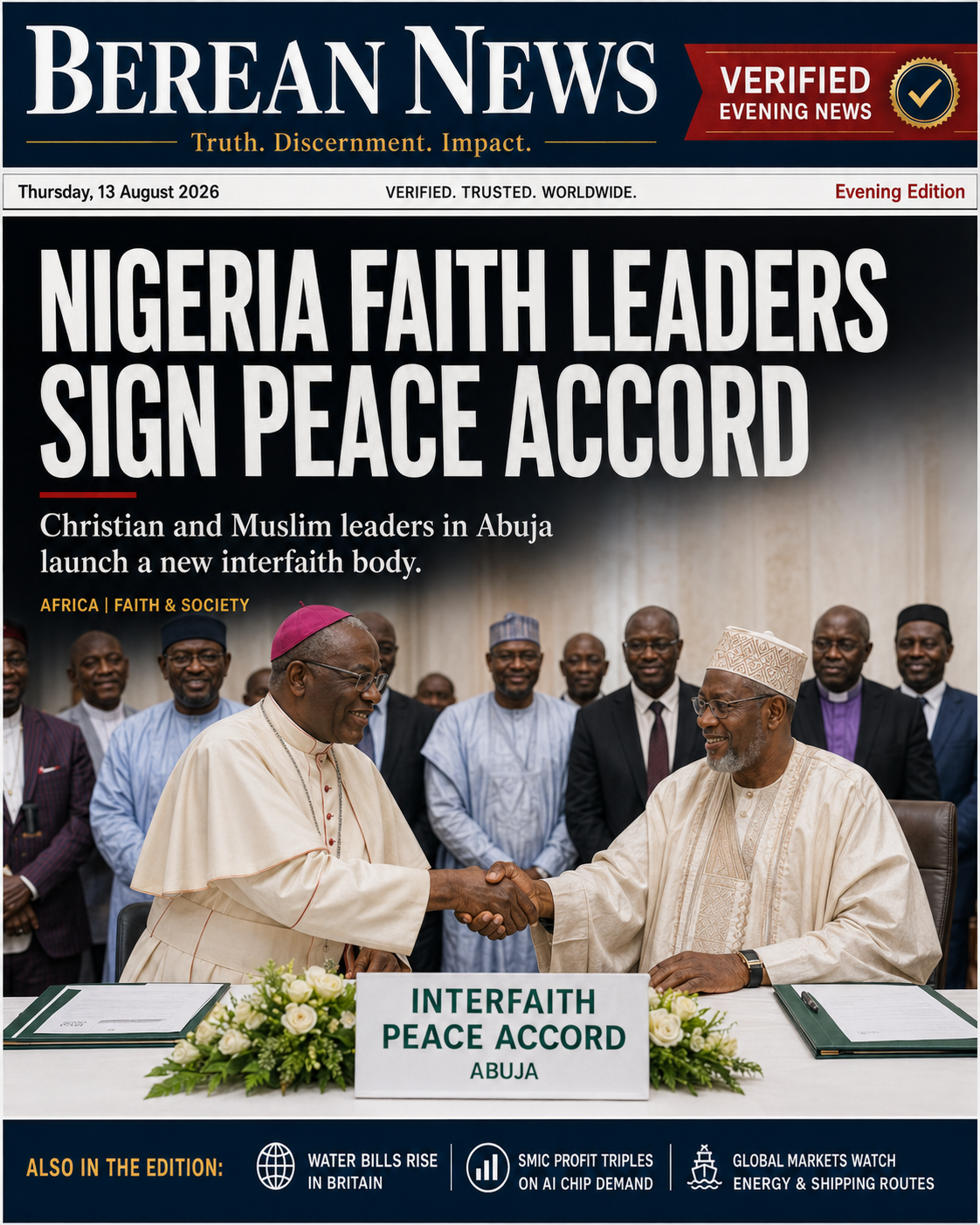
ABUJA — More than 50 Christian and Muslim leaders have signed a peace accord in Nigeria’s capital, launching a new organisation intended to promote religious harmony and confront extremism, hate speech and divisive rhetoric.
The accord emerged from a conference organised by the Saudi Arabia-based Muslim World League and brought together senior representatives of Nigeria’s two largest faith communities.
Nigeria’s population of more than 200 million is broadly divided between a mainly Muslim north and a largely Christian south, although both religions have significant communities across the country. Religious identity also overlaps with regional, ethnic and political differences.
The agreement calls for cooperation rather than theological compromise. Khalid Abubakar of Jama’atu Nasril Islam stressed that interfaith cooperation did not require anyone to abandon or dilute their religion. Christian representatives similarly emphasised the need to eliminate hate speech and language that dehumanises people of another faith.
Muslim World League Secretary-General Mohammad Al-Issa acknowledged that extremist ideologies had damaged communities across religious lines and said there was enthusiasm to begin a new chapter of cooperation.
Deputy Senate President Barau Jibrin, representing President Bola Tinubu, attended the event alongside three northern governors and said the federal government remained committed to national unity.
The accord comes against a complicated security background. Boko Haram and Islamic State West Africa Province have operated for more than 15 years, particularly in northeastern Nigeria. Christians have been among those killed, but analysts and rights organisations say the majority of victims of the insurgency have been Muslims because much of the violence has occurred in predominantly Muslim areas.
The agreement also arrives ahead of Nigeria’s January 2027 election, when religious balance will again be part of political debate. President Tinubu’s ruling All Progressives Congress is maintaining a Muslim-Muslim presidential ticket, continuing a departure from Nigeria’s informal tradition of balancing major tickets between Christians and Muslims.
Signing an accord cannot by itself resolve decades of insecurity and mistrust. Its significance will depend on whether national leaders can translate the Abuja agreement into local mediation, shared community initiatives, responsible preaching and practical interventions when religious tensions emerge.
Still, the initiative represents one of the strongest positive Faith & Society stories in the current international cycle.
Sources: Nigerian Christian and Muslim leaders; Muslim World League; Nigerian government; Reuters.
Corrections & updates
- Cover correction: this story is not a 10 September news item
A draft of the Global Evening Edition of Thursday 10 September 2026 briefly presented the Abuja interfaith peace accord as a cover story for that date. The accord was reported on 13 August 2026 and there was no new development on 10 September. The cover slot for that edition was given to the Bukavu school fire. We have corrected the record.
Sep 10, 2026, 8:45 PM · Corrections page - Story updatedAug 27, 2026, 1:52 PM
- Story published
Verified against the sources cited in this report.
Aug 13, 2026, 5:35 PM
Related stories

Dangote Refinery IPO becomes Nigerian investment phenomenon
The planned offer of 4.1 billion shares at about ₦525 each would raise roughly $1.6 billion and imply a valuation near $47 billion.
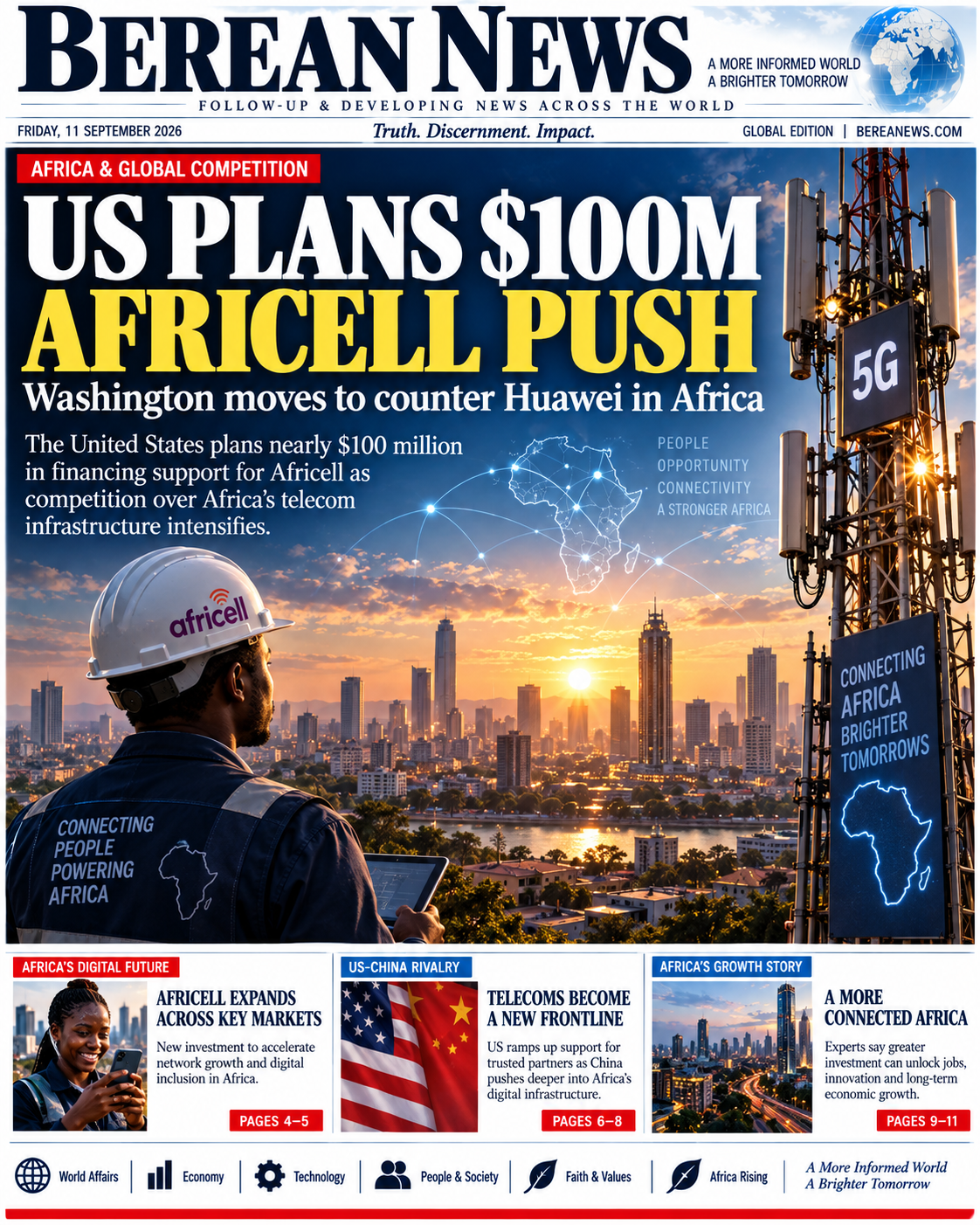
US plans nearly $100 million Africell loan as technology rivalry with China moves deeper into Africa
Export-Import Bank financing would let Africa's only US-owned mobile operator buy American and allied network equipment.
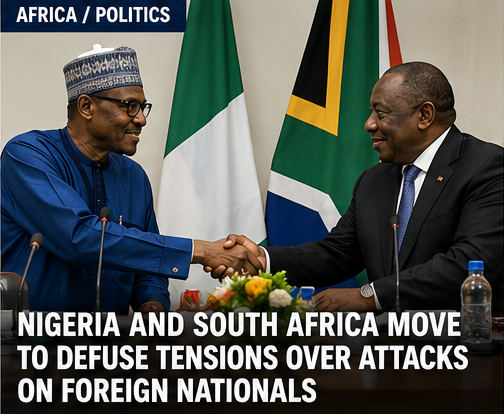
Nigeria and South Africa Seek to Defuse Tensions After Attacks on Foreign Nationals
South Africa has promised to pursue those responsible for recent violence, while Nigeria is compiling claims for compensation after attacks and looting affected Nigerian citizens and other African migrants.