Nigeria and South Africa Seek to Defuse Tensions After Attacks on Foreign Nationals
South Africa has promised to pursue those responsible for recent violence, while Nigeria is compiling claims for compensation after attacks and looting affected Nigerian citizens and other African migrants.
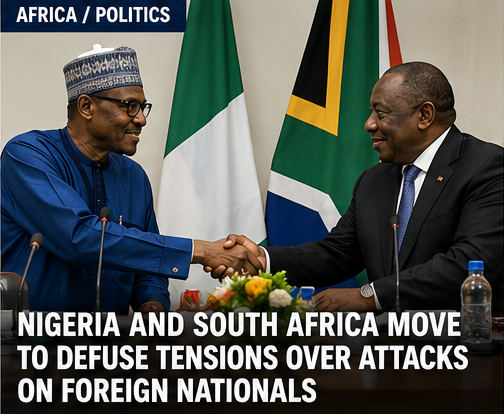
ABUJA — Nigeria and South Africa have agreed to reduce diplomatic tensions and strengthen cooperation following a wave of anti-migrant violence that targeted Nigerian citizens and other foreign nationals in South Africa.
The agreement followed talks in Abuja involving Nigeria's Minister of State for Foreign Affairs, Sola Enikanolaiye, and South Africa's Minister of International Relations and Cooperation, Ronald Lamola. Both sides said they wanted to prevent confrontational rhetoric from damaging relations between two of Africa's largest economies.
Nigeria raised concerns about repeated vigilante attacks, the looting of migrant-owned businesses and allegations that police had sometimes failed to intervene quickly enough. Abuja said both documented and undocumented migrants had been affected and insisted that people suspected of crimes must be dealt with through lawful investigation and prosecution rather than collective punishment or street violence.
South Africa condemned xenophobia, racism and discrimination and said the recent violence was not sponsored or supported by the state. Lamola promised that authorities would pursue people responsible for criminal attacks and stressed that allegations against individual foreign nationals should be handled through the courts.
Nigeria is compiling compensation claims relating to property and business losses suffered by its citizens. South Africa did not announce an immediate compensation mechanism, meaning the claims will still require assessment, legal consideration and agreement between the two governments.
The unrest has led Nigeria to repatriate approximately 1,490 citizens. The wider anti-migrant violence has also resulted in deaths, damaged businesses and the displacement of foreign nationals from several African countries.
Nigerian officials proposed practical measures including early-warning systems, greater police presence in vulnerable communities and stronger communication between diplomatic missions and local authorities. Such arrangements could help authorities identify rising tensions before protests or vigilantism escalate into violence.
Anti-migrant mobilisation in South Africa is frequently linked to public frustration over unemployment, crime, housing and pressure on public services. However, blaming foreign nationals collectively does not address those structural problems and can expose lawful residents, workers and business owners to violence.
The diplomatic progress is important, but its credibility will depend on prosecutions, protection for threatened communities, restitution for verified losses and transparent reporting by both governments.
The two countries must also avoid framing the dispute as a conflict between Nigerians and South Africans generally. The violence was carried out by particular groups and individuals, while many South African organisations, officials and residents have publicly opposed xenophobia.
Corrections & updates
- Marked as a developing story
This report is being updated as verified information arrives.
Jul 28, 2026, 11:30 AM - Story published
Verified against the sources cited in this report.
Jul 28, 2026, 11:20 AM
Related stories
African Union Backs Wider Migration Debate After Xenophobic Violence in South Africa
The African Union has supported calls for a broader continental discussion on migration following concern over xenophobic violence directed at foreign African nationals in South Africa.
US Envoys Eye Moscow and Kyiv as New Peace Push Takes Shape
US officials are preparing for separate missions to Russia and Ukraine this weekend, sources say, as Washington seeks to address security concerns and explore a path toward ending the war.
Kushner to Meet Netanyahu After Rare Direct Meeting With Hamas Leader
Washington pushes a Gaza framework covering an end to hostilities, withdrawal, disarmament and reconstruction.