Hong Kong jails Tiananmen vigil leaders under national security law
Lee Cheuk-yan was sentenced to seven years and Chow Hang-tung to seven years and three months for inciting subversion.
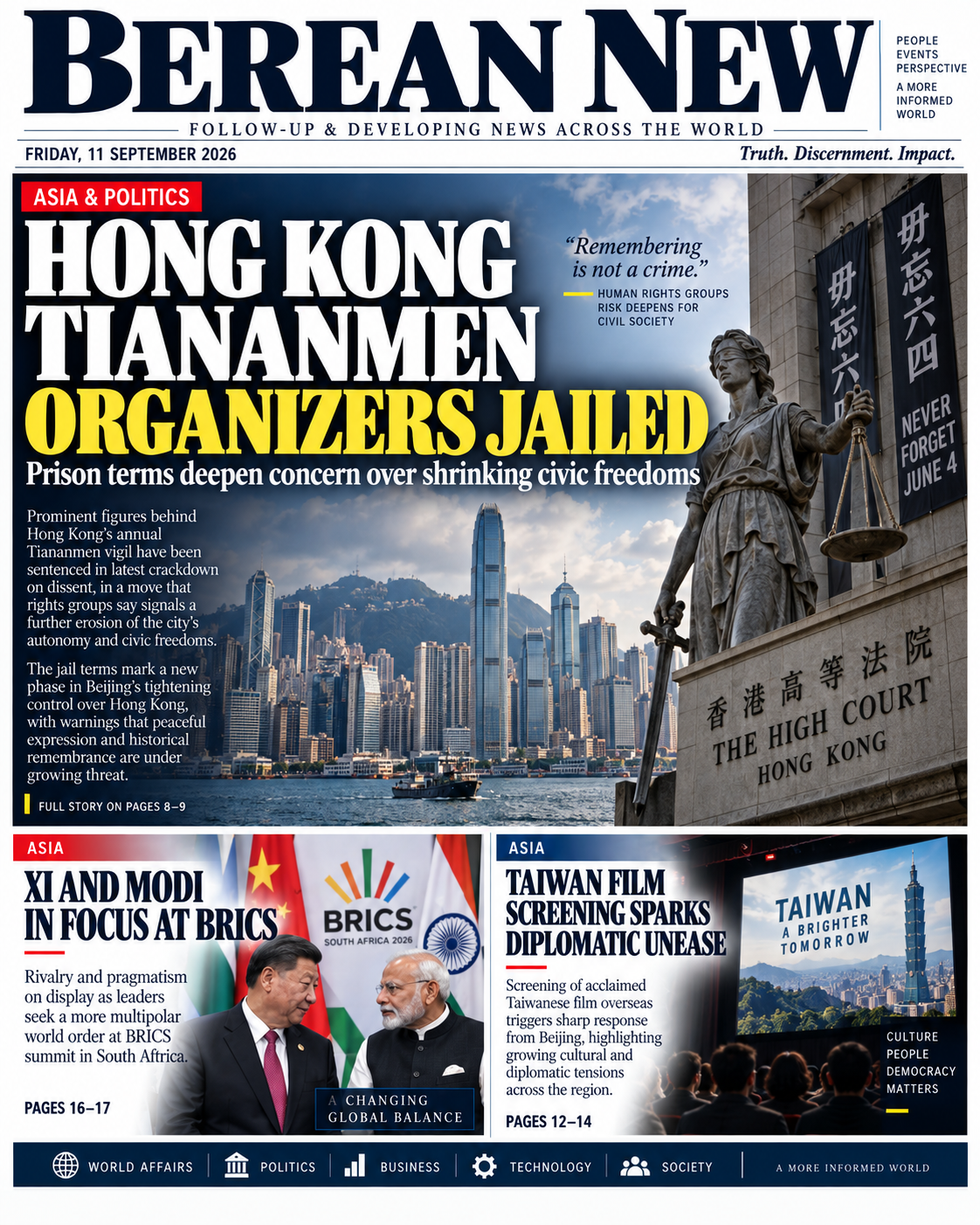
HONG KONG — Two prominent pro-democracy activists associated with Hong Kong's former annual Tiananmen Square vigils have received lengthy prison sentences after being convicted of inciting subversion under the city's national security law.
Lee Cheuk-yan, 69, was sentenced to seven years, while human-rights lawyer Chow Hang-tung, 41, received seven years and three months. Both had pleaded not guilty. Former Alliance leader Albert Ho, 74, had previously pleaded guilty and received a five-year sentence.
Lee and Chow were leaders of the now-disbanded Hong Kong Alliance in Support of Patriotic Democratic Movements of China, which for decades organised mass candlelight vigils commemorating Beijing's 1989 Tiananmen crackdown.
Those commemorations were once legally held in Hong Kong and became an important symbol of the civil liberties that distinguished the city from mainland China. They effectively ended after the introduction of the national security law in 2020 following the mass anti-government demonstrations of 2019.
Prosecutors focused partly on the Alliance's longstanding slogan calling for an "end [to] one-party dictatorship." Judges concluded that the organisation's political activity amounted to an attempt to undermine the constitutional leadership of the Chinese Communist Party.
Hong Kong's national-security police described the proceedings as fair and transparent, while China's National Security Office said the activists had sought to undermine the country's fundamental political system.
Critics take the opposite view. Taiwan condemned the proceedings as politically motivated, and Hong Kong democrats said the sentences demonstrated how dramatically political freedoms have contracted since 2020.
The case goes beyond the fate of three activists. It illustrates how Hong Kong's political and legal environment has changed: speech and organising once tolerated under the city's previous civic framework can now attract serious national-security charges.
Corrections & updates
- Story updatedSep 11, 2026, 3:11 PM
- Story published
Verified against the sources cited in this report.
Sep 11, 2026, 2:26 PM
Related stories

Typhoon Noul Weakens, but Flood and Landslide Risks Remain Across Southern China
More than 700,000 people were evacuated in Guangdong before landfall, while authorities continue to warn of torrential rain, flash floods and landslides after the storm moved inland.

Russian Soviet-era film screening in Taipei alarms Taiwan
A private screening for around 20 people has become a geopolitical controversy as Taiwanese officials point to a broader information campaign.
Xi–Modi meeting being arranged as BRICS summit opens new diplomatic test
China's foreign ministry says a bilateral meeting is being arranged during the New Delhi summit; it has not yet taken place.