WHO Warns West Nile Virus Cases Are Rising Across Parts of Europe
The World Health Organization says the risk remains low for most people but has urged countries to strengthen mosquito surveillance and public awareness as the transmission season begins.
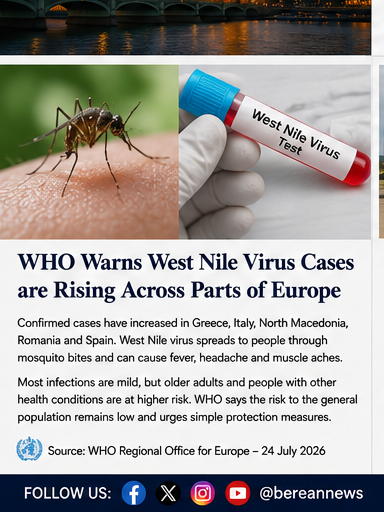
COPENHAGEN — The World Health Organization has urged European health authorities to strengthen mosquito monitoring and public-health communication following a rise in confirmed West Nile virus cases.
Greece had reported 21 confirmed human cases by 22 July, including 14 recorded during the preceding week. Twenty of the patients developed neuroinvasive disease, including meningitis or encephalitis, and 13 remained in hospital.
Italy had also confirmed 21 cases across 17 separate locations by 15 July, giving it the widest geographical distribution among affected countries. Locally acquired cases had additionally been reported in North Macedonia, Romania and Spain.
West Nile virus is mainly transmitted to humans through the bite of an infected mosquito. Mosquitoes usually acquire the virus from infected birds before transmitting it to people and other animals.
WHO says between 70 and 80 per cent of infected people develop no symptoms. Those who become unwell may experience fever, headache, tiredness, muscle pain, nausea, vomiting, rash or swollen lymph glands.
Approximately one in 150 infected people may develop severe disease affecting the central nervous system. Symptoms can include high fever, neck stiffness, confusion, tremors, convulsions, muscle weakness, paralysis or coma.
There is currently no licensed human vaccine and no specific antiviral treatment. Most mild cases require rest, fluids and symptom management, while severe illness may require hospital care.
WHO recommends wearing clothing that covers the arms and legs, using approved mosquito repellent, installing window screens and limiting outdoor exposure around dawn and dusk when mosquitoes may be more active.
Households and local authorities should also remove standing water from containers, pots, gutters and waste because stagnant water provides breeding sites for mosquitoes.
Warmer temperatures and longer summers may give mosquitoes more time and territory in which to transmit the virus. The organisation stresses, however, that the risk remains low for most people and that practical precautions can significantly reduce exposure.
Anyone who develops severe fever, neck stiffness, neurological symptoms or serious illness after possible mosquito exposure should seek medical attention promptly.
Corrections & updates
- Story updatedJul 25, 2026, 8:53 AM
- Story published
Verified against the sources cited in this report.
Jul 25, 2026, 6:00 AM
Related stories
UKHSA Reports Summer Rise in Imported Dengue and Zika Cases
Travellers are being advised to prevent mosquito bites, check destination-specific health information and seek medical advice if they become unwell after returning to the UK.

Children exposed to 9/11 to receive major long-term health study
United States health authorities have funded a multi-year study of people who were children in lower Manhattan in 2001, twenty-five years on.
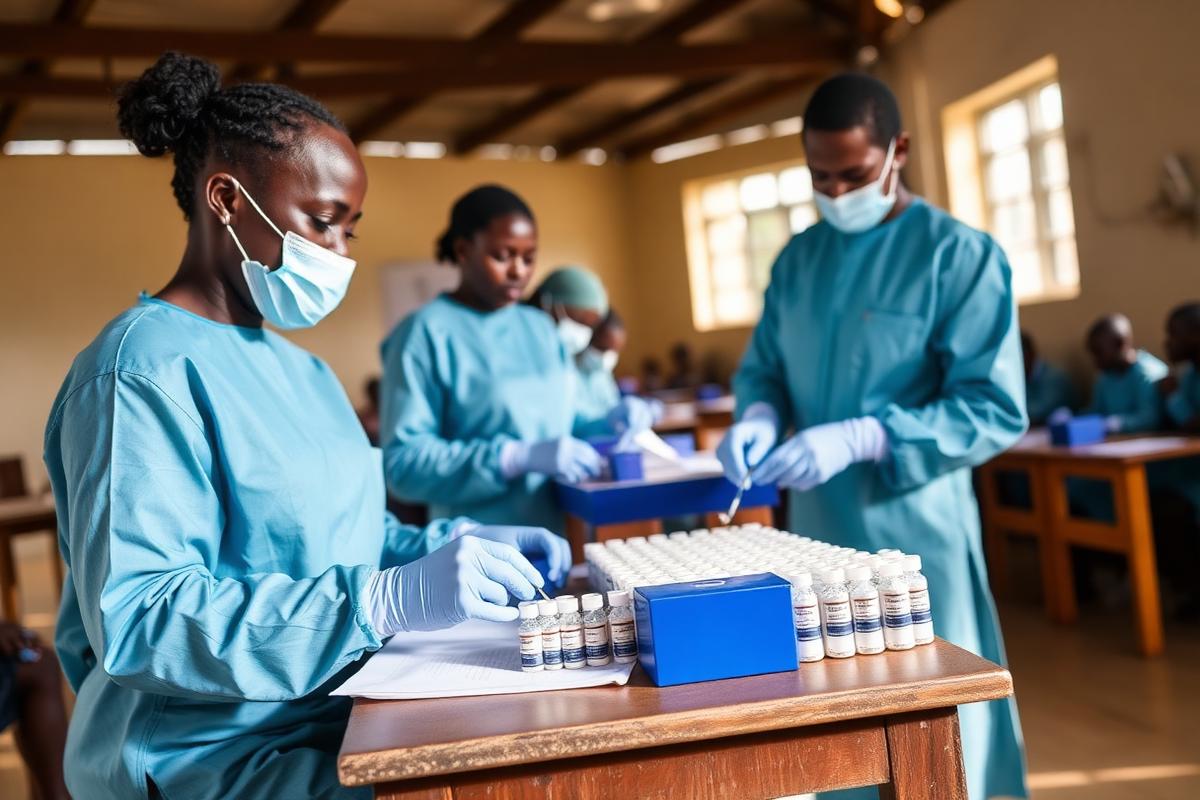
Africa Adopts 10-Year Plan to Protect Hard-Won Polio Gains
Health ministers approved the framework at the 76th WHO Regional Committee for Africa in Addis Ababa, focusing on surveillance, immunity and outbreak response.