UK Heatwaves Linked to 2,877 Deaths as Health Officials Warn of Record Summer Toll
The UK Health Security Agency estimates 2,877 heat-associated deaths in England during the May and June heat episodes, almost twice the total for the whole of summer 2025.
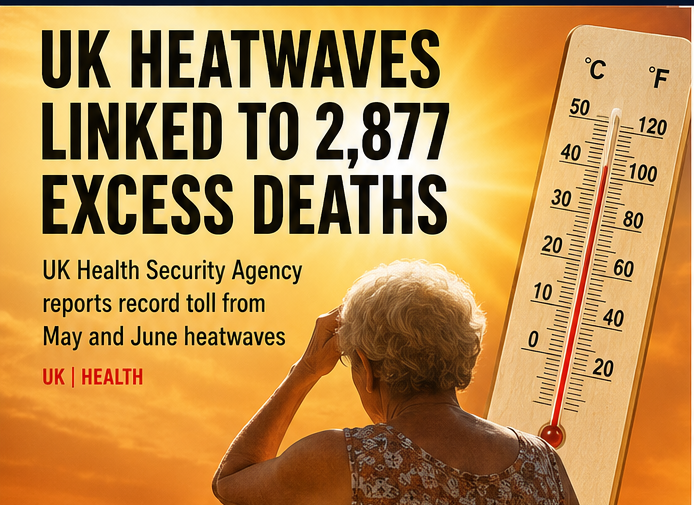
Nearly 2,900 deaths were associated with two periods of exceptionally hot weather in England during May and June, according to a rapid assessment published by the UK Health Security Agency.
The agency estimated that 2,877 heat-associated deaths occurred during the two episodes, almost twice the total recorded across the five heat episodes of summer 2025.
The preliminary figures show that an estimated 753 deaths were associated with the May heat episode, which ran from 24 to 27 May. A further 2,124 deaths were linked to the eight-day June heatwave between 21 and 28 June.
The June episode triggered a red heat-health alert, the most serious level of warning available under England's heat-health system. UKHSA said it was only the second occasion on which the highest alert level had been issued.
Both periods also produced new monthly temperature records for England. Temperatures reached 31.5 degrees Celsius at Kew Gardens on 26 May, while 37.7 degrees Celsius was recorded at Lingwood in Norfolk on 26 June.
The agency warned that the figures remain provisional and will be revised when final mortality data become available. However, officials said the early estimates were already approaching the annual record of 2,985 heat-associated deaths recorded in 2022.
Should England experience further severe heat episodes before the end of summer, 2026 could become the country's deadliest year on record for heat-associated mortality.
Older people, individuals with existing medical conditions, residents of poorly ventilated homes and people living alone are among those considered particularly vulnerable during periods of extreme heat.
Public-health specialists have also warned that heatwaves occurring earlier in the year may cause greater disruption because people, communities, hospitals and care providers have had less time to adapt to warmer conditions.
The findings are likely to increase pressure on national and local authorities to improve summer preparedness across hospitals, care homes, housing, transport and emergency services.
They may also intensify debate about the condition of Britain's housing stock. Many homes were designed to retain heat during winter but lack adequate ventilation, external shading or cooling systems for increasingly hot summers.
The UKHSA said warmer climatic conditions mean periods of extreme heat are likely to become longer, more frequent and more severe. Its final assessment of heat-associated deaths for 2026 is expected in early 2027.
Editor's note: the figure of 2,877 relates to an official rapid assessment of heat-associated deaths in England published on 30 July. It should not be confused with a separate attribution study published earlier in July that estimated approximately 2,750 heat-related deaths across England and Wales and examined the contribution of human-induced climate change.
Corrections & updates
- Story updatedJul 30, 2026, 12:17 PM
- Story published
Verified against the sources cited in this report.
Jul 30, 2026, 12:10 PM
Related stories
UK Heat Deaths Near Record High as Severe Summer Stretches Health Services
An estimated 2,877 excess deaths were associated with the May and June heatwaves in England and Wales, placing the 2026 summer close to the record levels recorded during the extreme heat of 2022.

Europe's Heatwave Losses Expose a Widening Insurance Gap
Insurers warn that a growing share of climate-driven damage is uninsured, leaving households and public budgets to absorb the cost.
England Upgrades Heat-Health Warnings as Temperatures Head Towards 36C
Amber alerts are in force across much of England as another heatwave approaches.