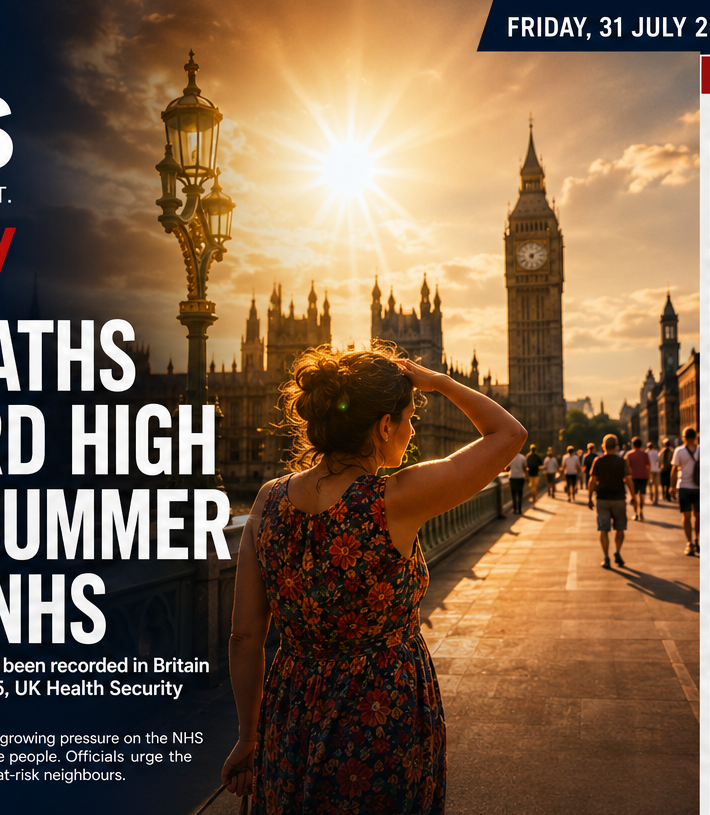
UK Heat Deaths Near Record High as Severe Summer Stretches Health Services
An estimated 2,877 excess deaths were associated with the May and June heatwaves in England and Wales, placing the 2026 summer close to the record levels recorded during the extreme heat of 2022.
The latest official estimate represents deaths occurring above the number normally expected during the periods of unusually high temperatures. It does not mean that every death certificate specifically listed heat as the cause. Public-health experts use mortality records, temperature data and statistical modelling to determine how many additional deaths were likely associated with extreme weather.
The figure is approaching the 2,985 heat-associated deaths reported during 2022, when Britain experienced temperatures above 40 degrees Celsius for the first time. Older people, those living with heart or respiratory conditions, people who live alone and residents of poorly ventilated homes remain among those at greatest risk.
Health authorities have warned that heat can worsen existing medical conditions, cause dehydration and place additional strain on the heart and lungs. High overnight temperatures can be particularly dangerous because they prevent the body and homes from cooling after prolonged daytime heat.
The growing mortality burden is also raising questions about Britain's preparedness for hotter summers. Many homes, hospitals, schools and care facilities were built to retain warmth during winter rather than remain cool during sustained heat. Local authorities and health services are increasingly being required to treat heat as a major public-health threat rather than an occasional weather event.
Public guidance includes drinking water regularly, avoiding strenuous activity during the hottest hours, closing curtains in rooms exposed to direct sunlight and checking on older or vulnerable relatives and neighbours. People should seek urgent medical help when signs of heatstroke — including confusion, loss of coordination, seizures or unconsciousness — appear.
The figures remain provisional and may be revised as mortality data are reviewed. They nevertheless provide strong evidence that extreme heat is becoming a significant and recurring threat to public health.
Corrections & updates
- Story updatedJul 31, 2026, 6:32 AM
- Story published
Verified against the sources cited in this report.
Jul 31, 2026, 5:50 AM
Related stories
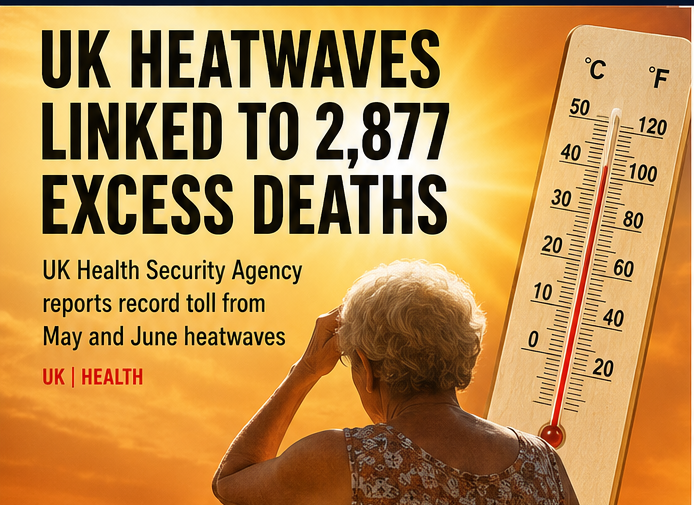
UK Heatwaves Linked to 2,877 Deaths as Health Officials Warn of Record Summer Toll
The UK Health Security Agency estimates 2,877 heat-associated deaths in England during the May and June heat episodes, almost twice the total for the whole of summer 2025.

Europe's Heatwave Losses Expose a Widening Insurance Gap
Insurers warn that a growing share of climate-driven damage is uninsured, leaving households and public budgets to absorb the cost.
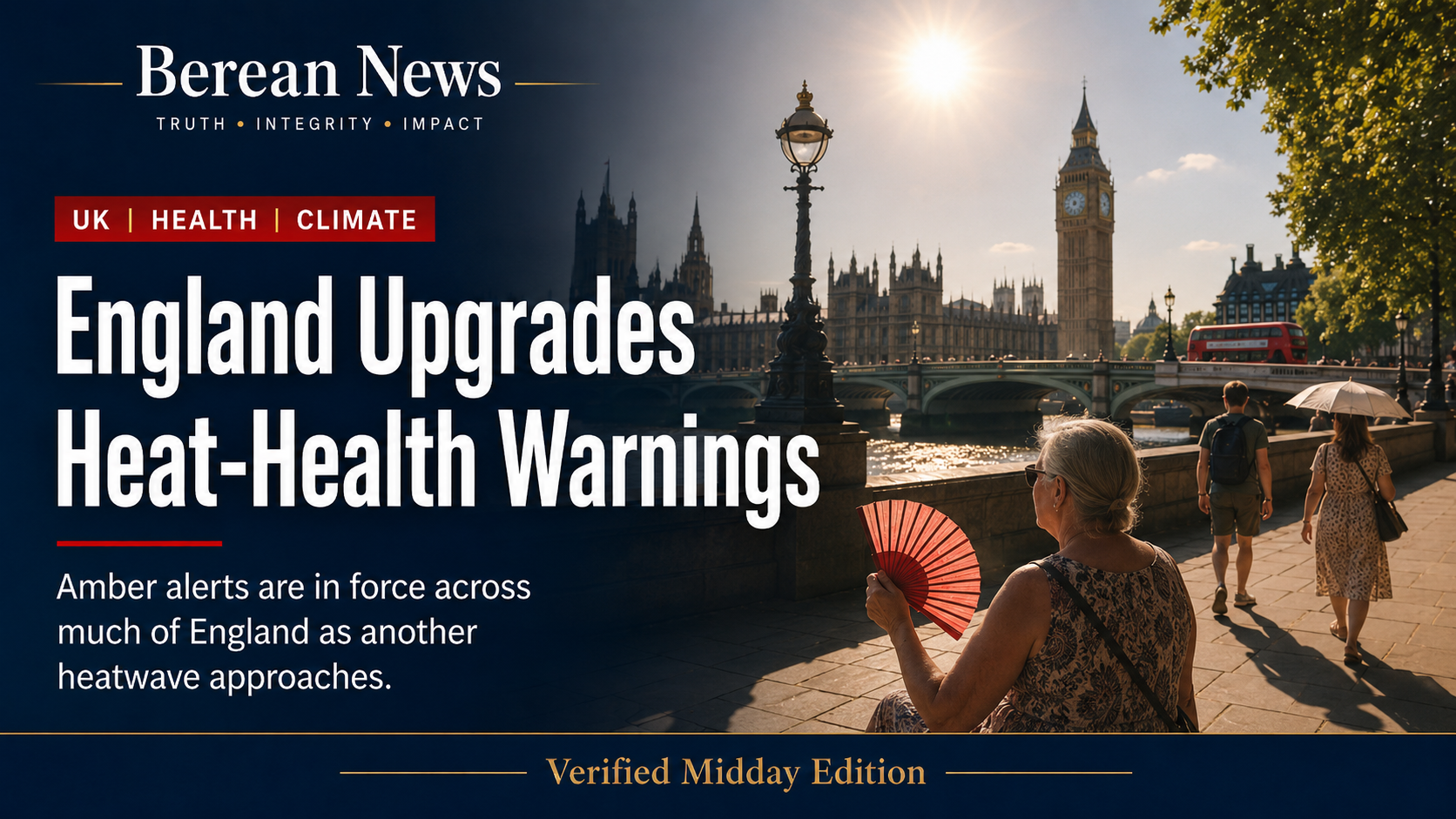
England Upgrades Heat-Health Warnings as Temperatures Head Towards 36C
Amber alerts are in force across much of England as another heatwave approaches.