Social-Housing Regulator Warns Weak Governance Can Put Tenants and New Homes at Risk
The Regulator of Social Housing says landlords must improve safety oversight, risk management, financial controls and the way they listen to tenants.
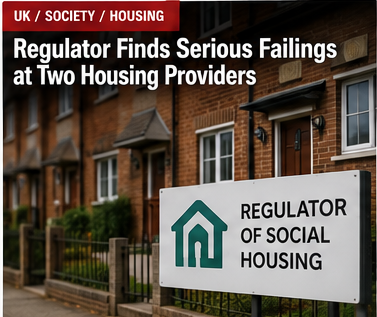
LONDON — England's social-housing regulator has warned that weak governance and poor risk management can undermine tenant safety, service quality and the delivery of new homes.
The warning is contained in the Regulatory Casework Review 2026, published by the Regulator of Social Housing. The review draws lessons from inspections and regulatory interventions involving housing associations, councils and other registered providers.
The regulator identified seven major lessons for landlords. These include maintaining reliable information about the condition and safety of homes, developing an effective risk-management culture, using accurate data, demonstrating value for money and maintaining strong oversight of financial performance.
The review also emphasises the importance of listening to tenants and using their experiences to shape services and organisational decisions.
Safety remains a central concern. Landlords need dependable systems showing whether gas, electrical, fire, structural and other safety obligations are being completed. Inaccurate or incomplete records can prevent boards and senior managers from understanding the risks faced by residents.
Financial governance is equally important because many housing providers must balance repairs, building-safety work, debt repayments and development programmes at a time of high construction and financing costs.
The regulator said organisations with stronger governance are better placed to provide safe homes and build additional social housing. Poorly governed landlords may struggle to demonstrate that they understand their properties, finances and legal obligations.
Several landlords remain subject to separate regulatory investigations. Aves Housing was placed under review in February, while YMCA Thames Gateway was added in April over matters that may indicate serious failings. Those investigations pre-date the publication of the latest sector-wide review and should not be described as new findings issued today.
The regulator has also announced revised transparency and conduct requirements. From October 2026, private registered providers will be required to publish specified information about how they manage social housing, with further tenant-access requirements following in 2027.
Why it matters
Millions of people rely on social landlords for safe, affordable accommodation. Failures in governance may affect repairs, safety checks, rent administration and the financial stability of housing organisations.
Corrections & updates
- Story updatedJul 29, 2026, 10:29 PM
- Story published
Verified against the sources cited in this report.
Jul 29, 2026, 9:14 PM
Related stories

Charity Commission Intervenes at London Spiritual Mission as Governance Scrutiny Continues
Interim managers are appointed as regulatory work into the connected charitable trust continues.

"AI could kill us all" — insider quits with warning
A senior safety researcher has left one of the leading artificial intelligence laboratories, saying internal safeguards are not keeping pace with the speed at which the most capable systems are being deployed.

Meta Settlement Puts Children's Digital Wellbeing at Centre of Global Social-Media Debate
A major US settlement restricting teenagers' use of Meta's platforms is prompting regulators elsewhere to ask why the same protections should not apply worldwide.