New UK Rules Aim to Block Scam Texts Before They Reach Consumers
Mobile operators and business-messaging providers will be required to strengthen identity checks, limit high-volume traffic and block malicious numbers, links and sender names.
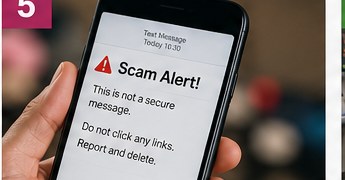
LONDON — Mobile users in the United Kingdom are set to receive stronger protection from fraudulent text messages under new rules finalised by communications regulator Ofcom.
The measures require mobile operators and companies that transmit business messages to do more to prevent criminals from accessing messaging services and to identify fraudulent activity after it begins.
Ofcom said criminals use text messages to impersonate banks, delivery companies, government departments, friends and relatives. Victims may be pressured into clicking malicious links, transferring money or revealing financial and personal information.
Fraud accounted for an estimated 45 per cent of reported crime incidents in England and Wales, while £1.28 billion was lost to criminals in 2025. Four in ten UK mobile users surveyed in 2026 said they had received at least one suspicious message during the previous three months.
Mobile companies already block more than 600 million suspicious or fraudulent messages annually, but Ofcom says inconsistent protection across the industry means additional action is required.
Under the new rules, mobile operators must collect information about suspicious messages, malicious links and phone numbers from customers and anti-fraud organisations. They will then be expected to block numbers used by scammers and stop fraudulent messages while they are travelling across their networks.
Operators must also introduce messaging-volume limits for pay-as-you-go SIM cards. This is intended to make it more difficult for criminals to use individual SIMs or large collections of SIM cards to send messages to thousands of potential victims.
Companies carrying business messages must conduct stronger "Know Your Customer" checks before allowing organisations to send large volumes of texts. They must also monitor account behaviour through "Know Your Traffic" checks and investigate suspicious activity promptly.
Sender names will face additional scrutiny. Businesses often use words rather than phone numbers to identify themselves in a customer's inbox. Providers must verify that these sender names correspond with the organisation's genuine activities.
Ofcom has also strengthened guidance concerning overseas calls that imitate UK mobile numbers. Telecoms companies are being advised to withhold caller identification where an international call appears to present a UK mobile number but cannot be authenticated.
Consumers who receive suspicious messages should not reply, click links or provide financial information. Suspicious texts and numbers can be forwarded free of charge to 7726, allowing the mobile operator to investigate.
The rules shift more responsibility towards the companies carrying mobile traffic, although users are still encouraged to independently verify unexpected requests involving payment, passwords or account information.
Corrections & updates
- Story updatedAug 27, 2026, 1:52 PM
- Story published
Verified against the sources cited in this report.
Jul 22, 2026, 7:20 AM
Related stories
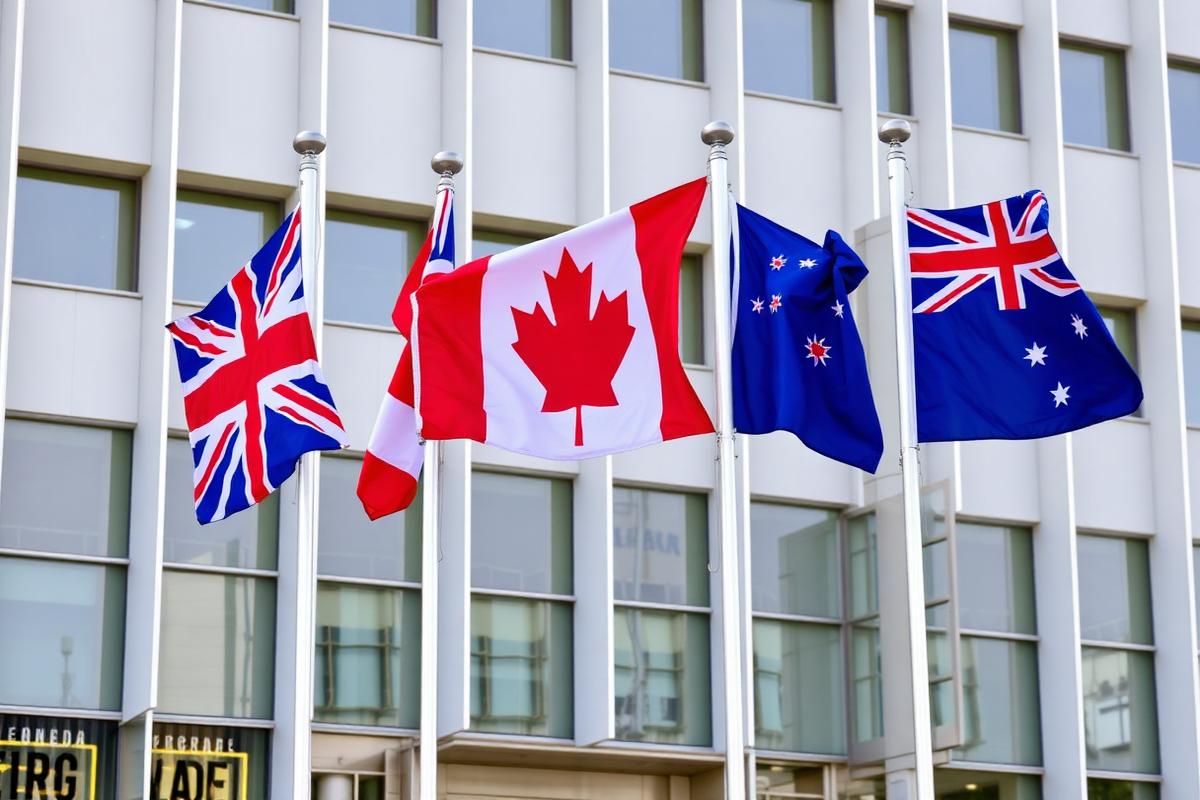
Five Eyes Powers Back UK-Led Crackdown on Global Online Fraud Networks
The US, Canada, Australia and New Zealand backed a UK-led package at the Five Country Ministerial in Sydney, with expanded support for the INTERPOL Global Fraud Taskforce.
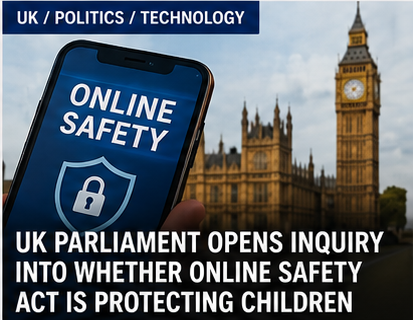
Parliament Opens Inquiry into Whether the Online Safety Act Is Working
A House of Lords committee will examine Ofcom's enforcement, changes made by online platforms and whether additional action is required to protect UK users.
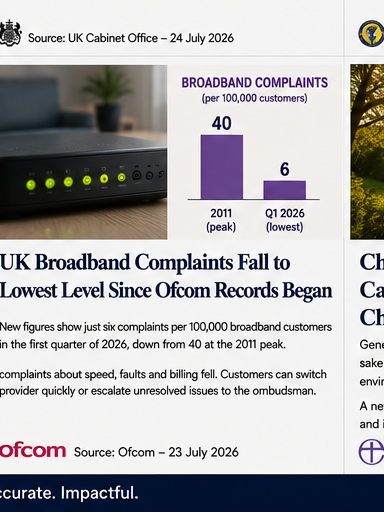
UK Broadband Complaints Fall to Lowest Level Since Ofcom Records Began
Complaints submitted to Ofcom fell to six per 100,000 broadband customers during the first quarter of 2026, compared with 40 per 100,000 at the 2011 peak.