UK Broadband Complaints Fall to Lowest Level Since Ofcom Records Began
Complaints submitted to Ofcom fell to six per 100,000 broadband customers during the first quarter of 2026, compared with 40 per 100,000 at the 2011 peak.
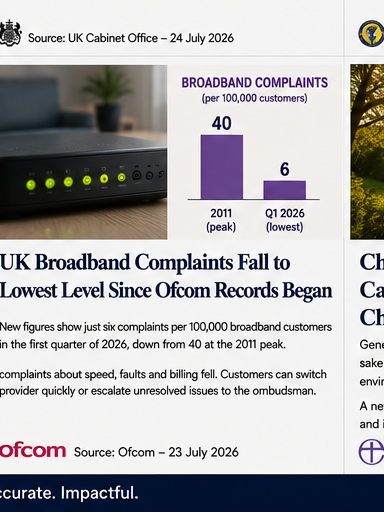
LONDON — Complaints made to Ofcom about major UK broadband providers have fallen to their lowest level since the regulator began publishing comparable figures.
The latest data covers January to March 2026 and shows that broadband complaints declined to six per 100,000 customers. In 2011, when complaints reached their recorded peak, the rate stood at 40 per 100,000.
Ofcom publishes the figures every quarter to help consumers compare the performance of broadband, mobile, landline and pay-television providers.
The data represents complaints submitted directly to Ofcom rather than every complaint made to the companies themselves. It therefore provides a measure of relative customer dissatisfaction but does not show the total number of technical faults or service disputes across the market.
Ofcom described the record decline as encouraging and said competition, network investment and greater consumer choice had contributed to improvements. The regulator nevertheless warned providers against complacency.
Customers continue to raise concerns involving service reliability, billing, contract terms, speed and complaints handling. Performance may also vary considerably by location because network availability and infrastructure differ between areas.
Consumers should therefore consider several factors when selecting a provider, including price, expected speed, contract length, reliability and customer-service performance.
Households experiencing a problem should first use their provider’s formal complaints procedure. If the matter remains unresolved after the required period, or the provider issues a deadlock letter, the customer may be able to refer the dispute to an approved alternative dispute-resolution service.
The decline from 40 complaints per 100,000 customers in 2011 to six in early 2026 indicates a substantial long-term improvement.
Maintaining that progress will be increasingly important as households depend on broadband for employment, education, banking, healthcare and communication.
Corrections & updates
- Story updatedJul 25, 2026, 8:53 AM
- Story published
Verified against the sources cited in this report.
Jul 25, 2026, 6:00 AM
Related stories

Angola Raises $329 Million Through Oversubscribed Unitel Share Sale
Investor demand exceeded the shares available by more than 20%, giving Angola's privatisation programme one of its most significant capital-market transactions to date.
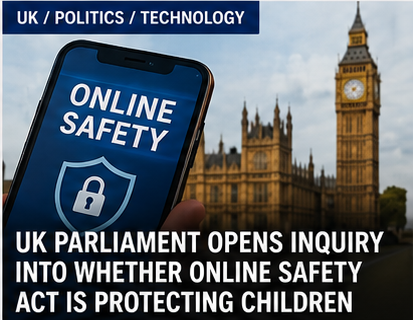
Parliament Opens Inquiry into Whether the Online Safety Act Is Working
A House of Lords committee will examine Ofcom's enforcement, changes made by online platforms and whether additional action is required to protect UK users.
Ofcom Reviews Powers After Suicide Forum Blocks Access for Most UK Users
The regulator says its enforcement action led an overseas forum to restrict access for the vast majority of UK users, but the case has exposed limits within the Online Safety Act.