Meta Launches Muse Glimmer as Zuckerberg Revives Open-Weight AI Strategy
The new open-weight AI model strengthens Meta's push for wider access to advanced tools.
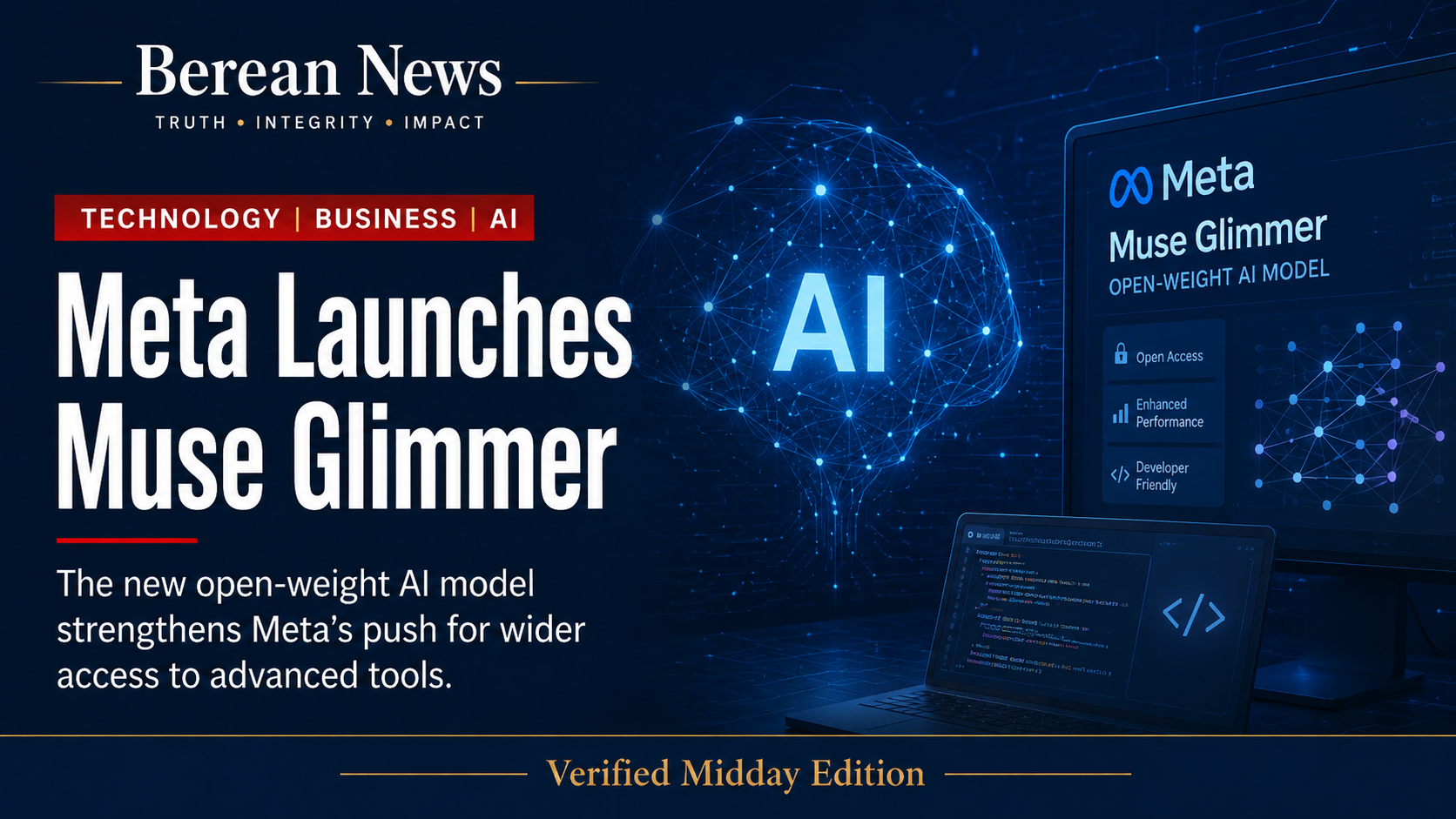
Meta has released a new artificial-intelligence model called Muse Glimmer, reviving its push to make advanced AI systems available in open-weight form and escalating the global debate over who should control increasingly powerful AI technology.
Muse Glimmer is much smaller than the largest models operated by major AI companies and has been designed specifically for agentic tasks. Meta says the system can run locally on a Mac or PC using a single graphics card, reducing the need to connect every AI workload to huge cloud-computing centres.
That could make the model attractive to software developers, companies and researchers that want to build customised AI agents while retaining more control over data and computing infrastructure.
Meta chief executive Mark Zuckerberg announced the model alongside a lengthy essay arguing for broader access to advanced artificial intelligence rather than allowing the technology to become concentrated among a small number of corporations or governments. He also said Meta intends to release larger models in the future.
The launch marks an important strategic shift. Meta had previously slowed aspects of its open-model programme as safety concerns around increasingly powerful AI systems intensified. The company is now returning more aggressively to open-weight releases at a time when Chinese developers are gaining global attention for efficient and widely accessible models.
The term "open-weight" is important. It means developers can obtain and run the model parameters, giving them considerably more freedom to modify and deploy the system than they would have with a closed service accessed only through a company-controlled interface.
Supporters argue that such openness encourages competition, lowers costs and enables independent researchers to examine models for weaknesses. Critics warn that once sophisticated model weights have been distributed widely, companies have less ability to control how those systems are modified or used.
Zuckerberg is also urging policymakers in Washington to avoid rules that he believes could leave American companies at a disadvantage against Chinese open-model developers.
Muse Glimmer therefore represents more than another AI product launch. It is part of a widening battle over the architecture of the AI industry itself: whether advanced systems should remain primarily closed and centrally controlled, or become technologies that individuals and smaller organisations can operate independently.
Source attribution: Meta; Mark Zuckerberg; Reuters; Financial Times.
Corrections & updates
- Story updatedAug 10, 2026, 1:52 PM
- Story published
Verified against the sources cited in this report.
Aug 10, 2026, 12:17 PM
Related stories

Anthropic considers new AI model amid safety debate and possible post-midterms IPO
The AI company is weighing a new model as competitive pressure grows; Ramp data indicates GPT-6 Astra has gained about 13% of enterprise AI spending.

OpenAI Pushes AI Frontier Forward With GPT-6 Astra - and Warns of New Cyber Risks
The company highlights major advances in AI capabilities - and warns of the new security risks that come with them.

Meta Settlement Puts Children's Digital Wellbeing at Centre of Global Social-Media Debate
A major US settlement restricting teenagers' use of Meta's platforms is prompting regulators elsewhere to ask why the same protections should not apply worldwide.