Iran Raises Price of Hormuz Reopening as Oman-Mediated Deal Moves Closer
Tehran says wider US concessions are still required even as Oman-mediated shipping talks move closer.
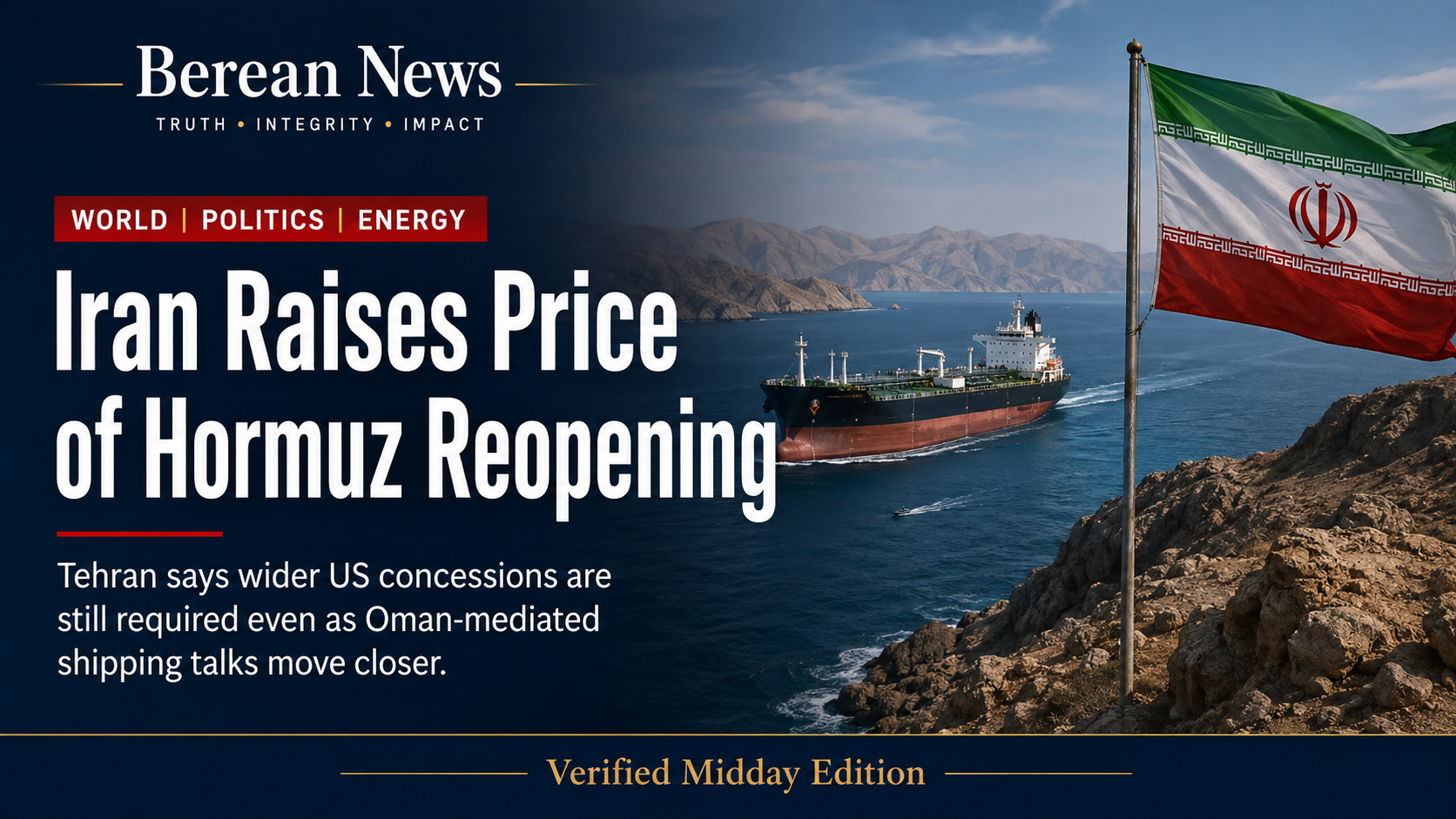
Iran has hardened its conditions for fully reopening the Strait of Hormuz, warning that progress in separate negotiations with Oman will not by itself be enough to restore normal commercial shipping through one of the world's most important energy corridors.
Tehran says discussions with Oman over new shipping routes through the strait are close to completion. But Iranian officials insist that the broader standoff with the United States must also be addressed before unrestricted passage returns. Iran is demanding measures including an end to the US naval blockade, sanctions relief, access to frozen Iranian assets and compensation for damage caused during earlier attacks.
Iranian officials have also said Tehran and Washington are not currently conducting direct negotiations, although messages continue to pass through intermediaries. This distinction matters because earlier market optimism had been driven partly by expectations that technical progress over shipping might quickly translate into a wider political settlement.
The Strait of Hormuz normally carries roughly a fifth of global oil and liquefied-natural-gas shipments, making disruption there immediately relevant to consumers and businesses far beyond the Middle East. A prolonged restriction can raise crude prices, marine-insurance costs, freight charges and ultimately transport and household energy bills.
Oil markets reflected those concerns on Monday. Brent crude moved higher as traders reassessed how quickly normal shipping might resume, while global markets remained focused on both the Hormuz negotiations and upcoming inflation data.
The Oman-mediated discussions are intended to define navigational arrangements for vessels moving through the strait. Iran and Oman have already made progress on the proposed route, but technical and political questions remain unresolved. Iranian security officials have separately stressed that the final decision to reopen the waterway is not dependent solely on the Oman negotiations.
For international shipping companies, the real test will not be the announcement of an agreement but whether insurers, vessel operators and crews consider the route safe enough to use again consistently.
Until that happens, Hormuz will remain a significant source of geopolitical and economic uncertainty.
Source attribution: Iranian Foreign Ministry; Omani mediation; Reuters; Associated Press.
Corrections & updates
- Marked as a developing story
This report is being updated as verified information arrives.
Aug 10, 2026, 1:52 PM - Story published
Verified against the sources cited in this report.
Aug 10, 2026, 12:20 PM
Related stories
Oil Heads for 6% Weekly Surge as Renewed US-Iran Fighting Shakes Global Energy Markets
Renewed US-Iran fighting shakes energy markets, with US diesel prices reaching record levels and Hormuz traffic thinning further.
Oil Jumps More Than $1 as White House Says US-Iran Talks Are Not Taking Place
Crude reversed earlier losses after Washington said no talks with Tehran were under way, with Brent trading in the high-$80s and US crude above $80.
Hormuz Crisis Deepens as Shipping Slows and Oil Prices Rise
Only five commodity vessels crossed the Strait on Saturday and none on Sunday, tracking data shows, as Brent crude holds near the high $80s.