Global Hunger Falls for Third Consecutive Year, but Africa Carries the Heaviest Burden
Global hunger declined again in 2025, but a new United Nations assessment warns that progress remains fragile and unequal, with Africa now recording the world's largest number of people affected by hunger.
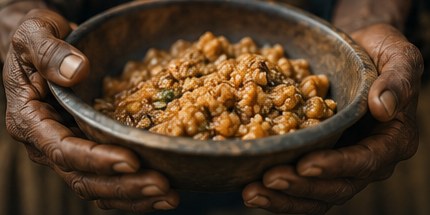
ROME — Global hunger declined for a third consecutive year in 2025, demonstrating that coordinated investment in agriculture, nutrition and social protection can produce measurable progress. However, a new United Nations report warns that the improvement remains too slow and uneven to achieve the international goal of ending hunger by 2030.
The 2026 edition of The State of Food Security and Nutrition in the World estimates that 7.8 per cent of the global population experienced hunger in 2025. This represents approximately 645 million people, compared with 8.1 per cent of the world's population in 2024 and 8.6 per cent in 2022. The latest total is almost 14 million lower than the previous year and around 43 million below the 2022 figure.
Despite the global improvement, progress has differed sharply between regions. Asia and Latin America and the Caribbean have recorded sustained reductions, while Africa continues to face a far more severe food-security crisis.
An estimated 309 million people experienced hunger in Africa in 2025, compared with about 292 million in Asia. Although Africa's hunger rate declined slightly from 20.3 per cent in 2024 to 20 per cent in 2025, population growth means the continent now has the highest number of hungry people in absolute terms.
The report's broader measure of food insecurity presents an equally serious picture. Around 2.1 billion people, or 25.8 per cent of the global population, experienced moderate or severe food insecurity in 2025. Those affected were sometimes forced to reduce the quality or quantity of their food, skip meals or live with uncertainty about where their next meal would come from.
More than half of Africa's population—56.6 per cent—experienced moderate or severe food insecurity. The comparable rates were 20.3 per cent in Asia, 22.9 per cent in Latin America and the Caribbean, and 8.7 per cent in Northern America and Europe. Rural communities remained more vulnerable than urban populations, while women continued to experience food insecurity at a higher rate than men.
Affordability is also a major concern. Approximately 66.6 per cent of people in Africa were unable to afford a healthy diet in 2025. Nutritious food is often made more expensive by weaknesses in transport, storage, processing and distribution systems. The report estimates that post-farm activities account for between 70 and 75 per cent of the price consumers eventually pay for food.
The assessment was produced jointly by the Food and Agriculture Organization, the International Fund for Agricultural Development, UNICEF, the World Food Programme and the World Health Organization. The agencies are calling for investment in irrigation, research, cold-storage systems, rural roads and more efficient food-distribution networks.
The findings show that reducing hunger requires more than producing additional food. Governments must also reduce waste, improve market access, strengthen household incomes and ensure that nutritious diets are affordable to low-income families.
Corrections & updates
- Story updatedAug 27, 2026, 1:52 PM
- Story published
Verified against the sources cited in this report.
Jul 22, 2026, 7:00 AM
Related stories
Congo Ebola response shows encouraging signs but WHO warns crisis is far from over
More than 7,000 infections have been recorded across seven provinces as responders confront the Bundibugyo strain and assess vaccine options.

US plans nearly $100 million Africell loan as technology rivalry with China moves deeper into Africa
Export-Import Bank financing would let Africa's only US-owned mobile operator buy American and allied network equipment.
Congo Ebola outbreak spreads to sixth province as cases pass 4,500
Health authorities confirm transmission in a sixth province, with cumulative cases above 4,500, months after neighbouring Uganda declared its own outbreak over.