More Than 300,000 Evacuated as Wildfires Spread Across France and Spain
Severe wildfires driven by extreme heat, prolonged drought and unpredictable winds have forced mass evacuations, destroyed homes and stretched emergency services across southwestern France and several regions of Spain.
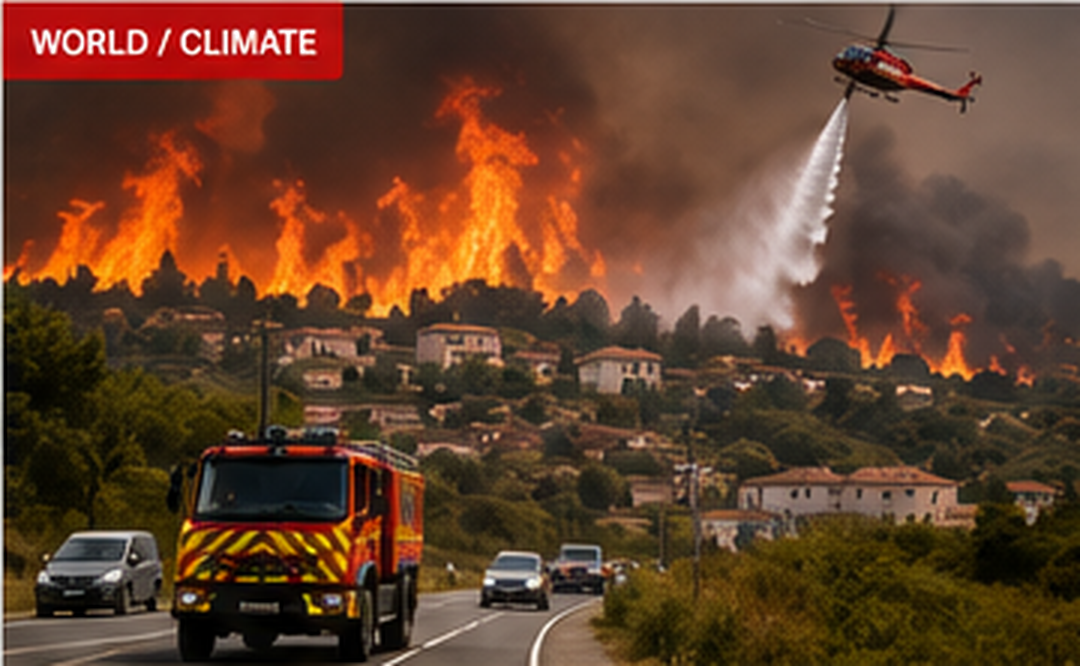
BORDEAUX — More than 300,000 people have been evacuated across France and Spain as major wildfires continue to threaten homes, businesses, agricultural land and popular tourist destinations.
In France, approximately 220,000 people had been evacuated in the Gironde region, while tens of thousands more were displaced in Spain. Later reporting indicated that the combined total may have risen further as authorities expanded evacuation zones.
The most serious French fire is burning around the Gironde department, including areas near Bordeaux, the Arcachon basin and the Cap Ferret peninsula. Police and emergency workers have been conducting door-to-door evacuations as shifting winds push the fire towards additional communities.
Bordeaux itself had not been placed under a general evacuation order by Sunday evening, but authorities opened emergency accommodation and urged tourists to avoid travelling into the affected region.
The Gironde fire had burned approximately 42,000 hectares, an area around four times the size of Paris. More than 2,500 firefighters were involved in the response, supported by aircraft, military personnel and assistance from other European countries.
Hundreds of homes and other buildings have reportedly been damaged or destroyed. Dozens of firefighters have also been injured while working in intense heat and extremely dangerous conditions.
The fire has generated its own unstable weather, including strong updrafts and fire clouds capable of producing lightning and spreading burning material beyond existing containment lines. These conditions make the direction and speed of the flames more difficult to predict.
Spain is simultaneously battling large fires in areas including Ávila, Madrid and Valencia. Approximately 75,000 people had been evacuated according to Reuters, while later accounts placed the figure higher as additional communities were cleared.
The Ávila fire has become one of Spain's largest recent wildfires, burning more than 50,000 hectares. Spain declared a civil-protection emergency to release additional resources and support communities affected by the fires. At least one death had been reported in Spain by Sunday.
Prolonged drought and unusually high temperatures have left forests, grasslands and scrub extremely dry. Reuters reported that temperatures in the affected areas had averaged around six degrees Celsius above historical norms, contributing to rapid fire spread.
Scientists have repeatedly warned that human-driven climate change is increasing the frequency and intensity of heatwaves and creating conditions in which severe wildfires can spread more quickly. Individual fires may still have different immediate causes, including human activity, accidents or lightning.
The immediate priority is protecting life, keeping evacuation routes open and preventing the fires from reaching more densely populated districts. The longer-term effects are expected to include housing losses, damaged infrastructure, ecological destruction and economic pressure on tourism, agriculture and local businesses.
Residents should follow official instructions, avoid closed roads and refrain from returning to evacuated communities until authorities confirm that conditions are safe.
Corrections & updates
- Story updatedJul 26, 2026, 9:55 PM
- Story published
Verified against the sources cited in this report.
Jul 26, 2026, 7:00 PM
Related stories
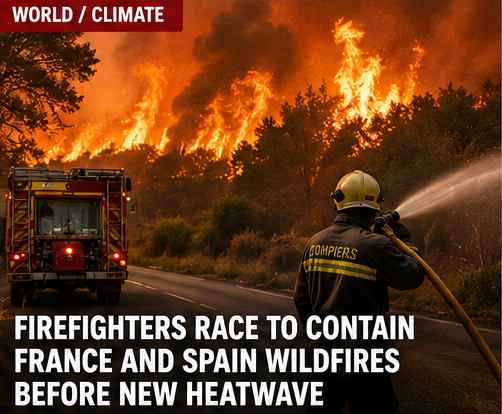
Firefighters Race to Contain France and Spain Wildfires Before New Heatwave
Some residents have been permitted to return home, but authorities warn that higher temperatures, low humidity and dry vegetation could cause controlled fire fronts to become dangerous again.

French Bishops Urge Churches to Support Families Displaced by Wildfires
Pope Leo XIV has expressed solidarity with people affected by wildfires in France and Spain, while French Catholic leaders have encouraged parishes to offer practical support and temporary refuge.

Typhoon Noul Weakens, but Flood and Landslide Risks Remain Across Southern China
More than 700,000 people were evacuated in Guangdong before landfall, while authorities continue to warn of torrential rain, flash floods and landslides after the storm moved inland.