Countries Accelerate Action to Defeat Meningitis by 2030
WHO says countries are moving from global planning to national implementation through stronger vaccination, laboratories, disease surveillance and patient care.
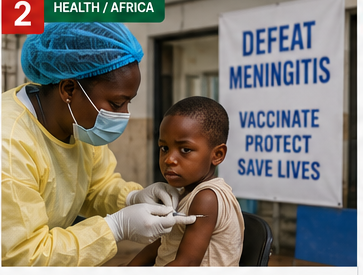
GENEVA — Countries are strengthening national plans to prevent meningitis deaths, improve outbreak detection and support people living with long-term complications, according to the World Health Organization.
WHO recently convened regional workshops in Copenhagen and Cairo to help governments implement the Defeating Meningitis by 2030 global roadmap. The meetings brought together policymakers, public-health leaders, laboratory specialists and technical experts to compare national plans and identify practical areas for action.
In Copenhagen, participating countries focused on improving surveillance and laboratory systems so outbreaks can be detected earlier and governments can gather the evidence needed to shape vaccination policy. In Cairo, countries reviewed their national meningitis strategies, identified implementation priorities and exchanged approaches for overcoming common barriers.
The countries involved have different disease patterns and health-system capacities, but several shared priorities emerged. These included expanding immunisation, improving laboratory confirmation, updating clinical guidelines, strengthening care for people affected by lasting complications and increasing public awareness.
Meningitis is an inflammation of the tissues surrounding the brain and spinal cord. It can be caused by bacteria, viruses, fungi or parasites. Bacterial meningitis is particularly serious and may lead to death or permanent disability if diagnosis and treatment are delayed.
Sub-Saharan Africa includes the region commonly known as the meningitis belt, where major meningococcal outbreaks have historically occurred. Vaccination has helped reduce some forms of disease, but countries still require dependable vaccine supplies, functioning laboratories and coordinated emergency systems.
Accurate laboratory confirmation is especially important during an outbreak because authorities must identify the organism and strain involved before selecting the most appropriate vaccination and treatment response.
WHO says countries also need to improve support for survivors. Meningitis can leave people with hearing loss, neurological difficulties, mobility problems, learning disabilities or other long-term conditions that require continued medical, educational and social support.
The regional meetings included lessons from Brazil, Colombia, El Salvador and the United Kingdom. WHO said continued technical assistance, regional cooperation and communities of practice will be needed to ensure that national plans lead to measurable improvements.
The 2030 roadmap seeks to eliminate bacterial meningitis epidemics, reduce preventable deaths and disability, and improve the quality of life of survivors. Achieving those goals will depend on whether governments turn planning documents into funded vaccination, surveillance, treatment and rehabilitation programmes.
Corrections & updates
- Story updatedAug 27, 2026, 1:52 PM
- Story published
Verified against the sources cited in this report.
Jul 24, 2026, 6:05 AM
Related stories

WHO Warns Attacks on Healthcare Are Becoming a Global Crisis
More than 900 attacks on hospitals, medical workers and health infrastructure have been documented in 2026, with consequences that outlast each incident.
Congo Ebola response shows encouraging signs but WHO warns crisis is far from over
More than 7,000 infections have been recorded across seven provinces as responders confront the Bundibugyo strain and assess vaccine options.

US plans nearly $100 million Africell loan as technology rivalry with China moves deeper into Africa
Export-Import Bank financing would let Africa's only US-owned mobile operator buy American and allied network equipment.