UK Invests £708 Million in Next-Generation Combat-Air Technology
More than 4,500 workers and approximately 600 British companies and academic institutions are expected to contribute to the next phase of the United Kingdom's Future Combat Air System.
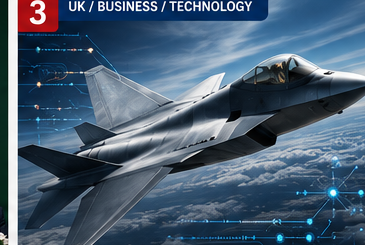
LONDON — The UK Government has awarded a £708 million contract to accelerate the development of advanced combat-air technologies intended for future use by the Royal Air Force.
The investment extends the existing Future Combat Air System programme led by BAE Systems alongside Team Tempest partners Leonardo UK, MBDA UK and Rolls-Royce. The work will support technology development connected with the wider Global Combat Air Programme involving the United Kingdom, Italy and Japan.
More than 4,500 workers across the UK are expected to participate, with approximately 90 per cent of the jobs located outside London and the South East. Around 600 British companies and academic institutions form part of the programme's supply chain.
The programme will develop artificial intelligence, advanced software, digital engineering and manufacturing technologies. It will also involve augmented reality, additive manufacturing and robotics, which the Ministry of Defence says can improve the way aircraft and defence systems are designed, tested and produced.
The Government says the investment will support both national defence capability and skilled employment across the aerospace and engineering sectors. Previous stages have expanded digital-engineering systems, created specialist infrastructure and advanced technologies required for future combat-air platforms.
The latest contract forms part of a broader financial commitment. The Government has confirmed that £8.6 billion will be invested in the Global Combat Air Programme over the next four years, while more than £5 billion has been committed to the wider Future Combat Air System since 2018.
The programme is expected to contribute technologies for crewed aircraft, autonomous platforms, advanced weapons, sensors and secure data networks. Some of the engineering capabilities may also have applications beyond defence, particularly in advanced manufacturing, software and aerospace supply chains.
However, the use of artificial intelligence in future military systems will require transparent governance. AI may be used for design, maintenance, sensor processing or operational decision support, and each application raises different questions concerning reliability, cybersecurity, legal accountability and human control.
Large defence programmes also face recurring risks involving delays, changing technical requirements and rising costs. Continued parliamentary oversight will therefore be important as the project moves from research and development towards operational delivery.
The investment represents a significant vote of confidence in Britain's aerospace sector. Its long-term value will depend on whether it delivers the promised capability, employment and industrial benefits within an accountable and sustainable budget.
Corrections & updates
- Story updatedJul 24, 2026, 8:09 AM
- Story published
Verified against the sources cited in this report.
Jul 23, 2026, 7:00 AM
Related stories

US delay on $14 billion Taiwan arms package raises questions before Trump–Xi meeting
Anduril founder Palmer Luckey says delays in US approvals are affecting business as tensions over Taiwan continue and a Trump–Xi meeting is expected next week.

Anthropic considers new AI model amid safety debate and possible post-midterms IPO
The AI company is weighing a new model as competitive pressure grows; Ramp data indicates GPT-6 Astra has gained about 13% of enterprise AI spending.

OpenAI Pushes AI Frontier Forward With GPT-6 Astra - and Warns of New Cyber Risks
The company highlights major advances in AI capabilities - and warns of the new security risks that come with them.