Pope Leo Calls for Artificial Intelligence to Serve Truth, Dignity and the Common Good
The Pope has urged Christian communicators to use technological tools responsibly and resist systems that weaken truth, human judgement or genuine relationships.
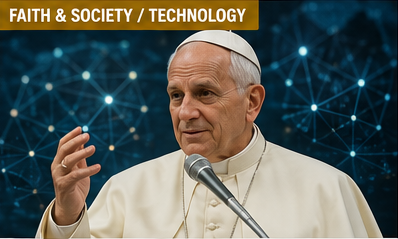
VATICAN CITY — Pope Leo XIV has called on Church communicators to confront the opportunities and dangers of artificial intelligence with wisdom, responsibility and a firm commitment to human dignity.
The message was addressed to participants in the Seventh International Seminar on Church Communication, held at the Pontifical Catholic University of Chile in Santiago on 27 and 28 July. It was transmitted on the Pope’s behalf by Cardinal Secretary of State Pietro Parolin.
Pope Leo encouraged communicators to ensure that technology remains at the service of truth and the common good. He said communication should protect human dignity, encourage genuine encounter and contribute to the Church’s proclamation of the Gospel.
The seminar examined the ethical, cultural and religious implications of artificial intelligence for media, pastoral ministry, education and public life.
Generative AI can assist with translation, research, accessibility, administration and content production. At the same time, it can fabricate realistic images, audio and video, imitate trusted leaders and spread false information at considerable speed.
The Pope’s intervention is particularly relevant to churches and Christian organisations. Fabricated sermons, impersonated voices, invented prophecies and false fundraising messages can exploit the trust people place in religious leaders.
Responsible ecclesial communication therefore requires verification, transparency and human editorial control. AI-generated material should not be presented as eyewitness evidence, an authentic quotation or an official statement when it is not.
The Pope’s wider teaching on AI argues that truth should be regarded as a common good. His encyclical Magnifica Humanitas warns that digital systems can blur the boundary between fact and falsehood and weaken social trust when information is not verified responsibly.
The Holy See has also emphasised that responsibility cannot be surrendered to an algorithm. Critical decisions affecting people’s rights, safety and dignity must remain subject to meaningful human oversight and clear accountability.
For Christian media, the practical standard is not simply whether a technology produces attractive or efficient content. The deeper question is whether its use is truthful, fair, transparent and beneficial to the people it reaches.
Corrections & updates
- Story updatedJul 30, 2026, 3:02 PM
- Story published
Verified against the sources cited in this report.
Jul 30, 2026, 2:30 PM
Related stories
Pope Leo Warns Technology Must Not Replace Human Responsibility in War
In his World Day of Peace message, the Pope argued that decisions over life and death cannot be delegated to machines.

OpenAI Pushes AI Frontier Forward With GPT-6 Astra - and Warns of New Cyber Risks
The company highlights major advances in AI capabilities - and warns of the new security risks that come with them.
Pope Leo Prepares to Celebrate Assumption at Castel Gandolfo
The Holy Father will preside over Mass at 10:00 a.m. on 15 August at the Pontifical Parish of Saint Thomas of Villanova.