Global Road Death Rate Falls 21%, but Crashes Still Claim 1.16 Million Lives
WHO reports that the global road-death rate declined between 2011 and 2025, although traffic crashes remain the leading cause of death among children and young adults aged five to 29.
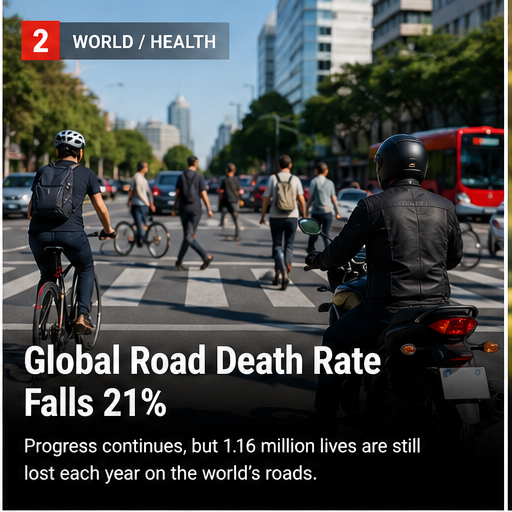
NEW YORK — The global rate of road traffic deaths fell by 21 per cent between 2011 and 2025, despite the addition of more than one billion motor vehicles to roads worldwide, according to new data released by the World Health Organization.
The decline represents meaningful progress in road safety, but WHO warned that traffic crashes still killed approximately 1.16 million people in 2025. Road injuries remain the leading cause of death among children and young people aged five to 29.
The figures were released as the United Nations General Assembly adopted a new declaration intended to accelerate action towards reducing road deaths and serious injuries by 50 per cent by 2030, compared with 2021 levels.
WHO is encouraging governments to apply a "safe system" approach that recognises that human beings make mistakes. This approach requires roads, vehicles, speed limits and safety regulations to be designed so that errors do not automatically result in death or life-changing injury.
The global transport environment has changed significantly since 2011. Motorcycle use has expanded rapidly, partly because of delivery services, ride-hailing platforms and increased demand for affordable urban transport.
WHO said the number of motorcycles worldwide more than tripled between 2011 and 2025. Motorcyclists now account for almost one-third of global road fatalities. Wearing a certified motorcycle helmet can reduce the risk of death in a crash by more than six times.
Pedestrians, cyclists and motorcyclists together account for more than half of all road deaths. WHO warned that many urban transport systems continue to be designed primarily for private cars, leaving more vulnerable road users exposed.
Progress has also been uneven between regions. Road deaths fell by 36 per cent in the WHO European Region and by 15 per cent in the Western Pacific Region. The South-East Asia Region recorded a two per cent reduction, while rates remained largely unchanged in the Americas.
The WHO African Region, however, experienced a 17 per cent increase in road deaths, demonstrating the urgent need for safer infrastructure, stronger enforcement, improved emergency response and greater protection for pedestrians and motorcyclists.
The organisation says stronger laws on speeding, drink-driving, seat belts, child restraints and helmets must be accompanied by enforcement. Safer road design, vehicle standards and post-crash care are also essential.
The fall in the global death rate shows that road fatalities are preventable. However, the continuing loss of more than one million lives each year means progress must accelerate if the 2030 target is to be achieved.

Global Hunger Falls for Third Year, but Africa Now Has the Highest Number Affected
A new United Nations assessment estimates that global hunger declined in 2025, but warns that progress remains fragile and deeply unequal, with Africa now accounting for the largest number of undernourished people.

African Union Health Summit Opens in Accra with Ending AIDS and TB by 2030 in Focus
African leaders, ministers, health organisations and civil-society representatives are gathering in Ghana for a high-level summit focused on AIDS, tuberculosis, maternal health and universal healthcare.

WHO Says Up to 45% of Dementia Risk Could Be Prevented or Delayed
Updated WHO guidelines recommend physical activity, social engagement, tobacco cessation, improved heart health and reduced air-pollution exposure as part of a life-course approach to dementia prevention.