European Union Expands Plan to Build Seven AI Gigafactories
The European Union has announced plans to support the construction of seven AI gigafactories as part of its attempt to compete more effectively with the United States and China.

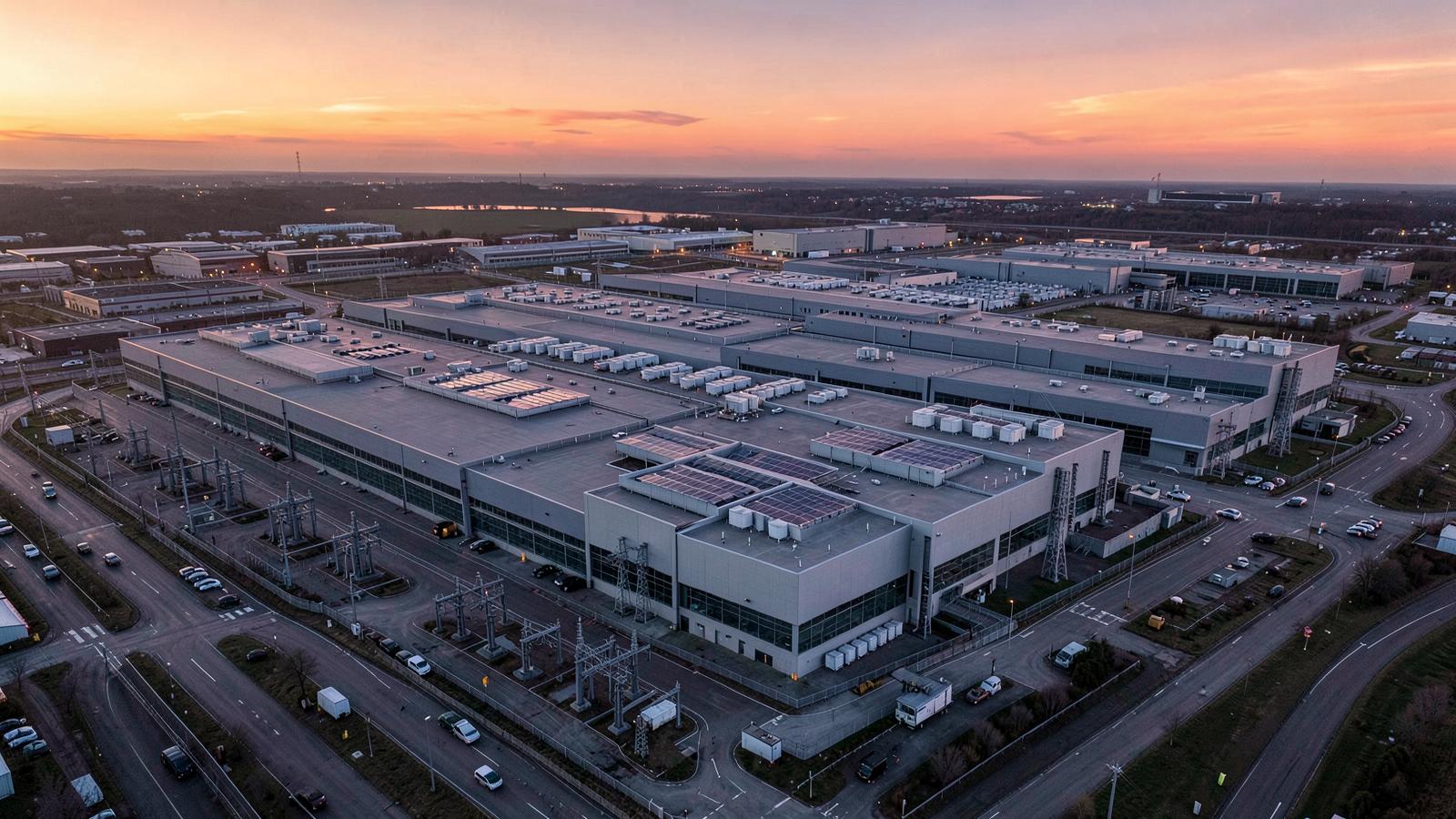
The proposed facilities will provide large-scale computing power for training and operating advanced artificial-intelligence models. Each centre is expected to house at least 100,000 cutting-edge AI chips and to be significantly more powerful than many existing European data centres.
The European Union plans to provide approximately €10 billion in public funding and attract at least €20 billion in additional private investment. The programme has expanded from an earlier proposal involving five facilities.
European officials describe the strategy as an effort to strengthen technological sovereignty. Most of the world's leading AI companies, cloud providers and advanced chip designers are based in the United States, while China has also invested heavily in domestic computing infrastructure.
Europe remains dependent on foreign companies for many of the processors, platforms and cloud services required to build advanced AI systems. The gigafactory initiative is intended to provide European researchers, start-ups and industrial companies with access to computing resources that would otherwise be difficult or expensive to secure.
The project also faces major challenges. Advanced data centres consume large amounts of electricity and water, particularly when cooling thousands of high-performance processors. Suitable locations will need reliable power supplies, strong digital networks and credible environmental plans.
Europe also lacks a major domestic producer of the most advanced AI processors, meaning the facilities may still rely heavily on chips designed by American companies such as Nvidia and AMD.
The Commission says systems developed using the facilities will be expected to comply with European standards covering safety, ethics and data protection.
Applications for participating projects are expected to be assessed before final locations are chosen. The first facilities could become operational from 2028, although financing, construction and chip availability may affect the timetable.
Corrections & updates
- Story updatedJul 31, 2026, 6:32 AM
- Story published
Verified against the sources cited in this report.
Jul 31, 2026, 5:45 AM
Related stories
Oracle revenue jumps 30% as AI cloud backlog reaches $664 billion
Contracted future revenue from artificial intelligence infrastructure has grown to a scale that now shapes the whole cloud market - and raises questions about how much of it converts.

OpenAI Pushes AI Frontier Forward With GPT-6 Astra - and Warns of New Cyber Risks
The company highlights major advances in AI capabilities - and warns of the new security risks that come with them.

Nvidia Says AI Boom Still Has Years to Run as It Forecasts 70% Sales Growth
The chipmaker's outlook for roughly 70% revenue growth next fiscal year lifted technology shares and eased fears of a sharp slowdown in AI infrastructure spending.