Bolsonaro AI Avatar Tests the Boundaries of Brazil's Election Rules
An artificial-intelligence recreation of former president Jair Bolsonaro appeared at his son's campaign launch, triggering legal challenges and new questions about synthetic political speech.
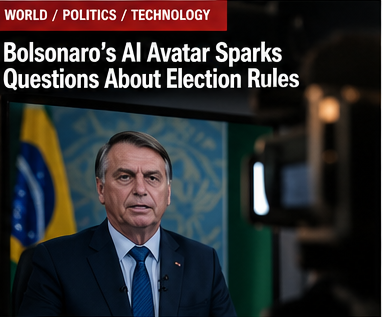
BRASÍLIA — An AI-generated avatar of former Brazilian president Jair Bolsonaro has intensified debate over how election authorities should regulate synthetic political appearances.
The avatar appeared during the launch of Senator Flávio Bolsonaro's presidential campaign and delivered a message to supporters. The video disclosed that it had been created using artificial intelligence.
Jair Bolsonaro is under house arrest and has been restricted from taking part in the election campaign. The use of a digital likeness therefore raised the question of whether AI can be used as a substitute for a politician who is legally prevented from communicating directly with voters.
Left-wing political parties challenged the video in court. No final judicial ruling establishing a violation had been reported at the time of publication.
Brazil's electoral rules prohibit some uses of fabricated or manipulated material that spread false or misleading information capable of undermining an election. However, the legal position may be more complicated when a synthetic video is clearly labelled as AI-generated.
One Brazilian legal specialist told Reuters that the central question was whether the avatar violated electoral restrictions or merely used an artificial representation that was disclosed to the audience.
The campaign reportedly argued that disclosure of the AI production provided a sufficient legal basis for showing the video. Jair Bolsonaro was also reported not to have been told beforehand that the avatar would appear.
The controversy extends beyond one candidate. Election authorities around the world have concentrated heavily on deceptive deepfakes used to spread false information or damage opponents.
The Brazilian case introduces a different challenge: a clearly identified synthetic representation being used to extend the political presence of someone subject to legal restrictions.
Regulators may now need to distinguish among impersonation, parody, disclosed synthetic communication and the use of AI to evade judicial orders.
Why it matters
The eventual ruling could shape how AI-generated political messages are treated in Brazil's October election and may influence regulation in other democracies facing similar questions.
Corrections & updates
- Story updatedJul 29, 2026, 10:29 PM
- Story published
Verified against the sources cited in this report.
Jul 29, 2026, 9:15 PM
Related stories

OpenAI Pushes AI Frontier Forward With GPT-6 Astra - and Warns of New Cyber Risks
The company highlights major advances in AI capabilities - and warns of the new security risks that come with them.
Zambia Suspends Vote Count Nationwide After Ballots Stolen and Officials Targeted
The Electoral Commission has halted counting and the announcement of results across the country after violence in several districts; the suspension will be reviewed within 24 hours.

Pope Leo Warns Technology Must Not Replace Human Responsibility in War
In his World Day of Peace message, the Pope argued that decisions over life and death cannot be delegated to machines.