AIDS 2026 Focuses on Turning Lenacapavir Breakthrough into Equitable Access
Researchers, governments and community organisations are examining how twice-yearly injectable HIV prevention can be introduced affordably and effectively while global programme financing remains under severe pressure.
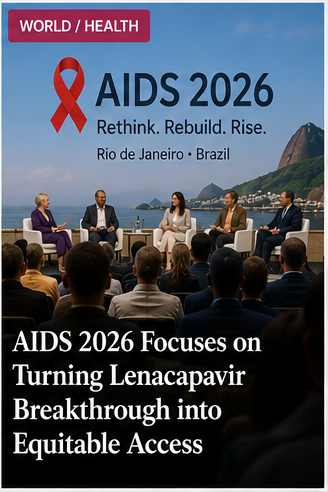
RIO DE JANEIRO — AIDS 2026 is turning its attention towards one of the most important questions in modern HIV prevention: how to move long-acting injectable lenacapavir from scientific success to affordable, equitable access.
A major conference session on Monday is examining how implementation science can support the introduction of twice-yearly injectable lenacapavir for pre-exposure prophylaxis, commonly known as PrEP. The session is being organised by the Gates Foundation, Unitaid and the World Health Organization.
Lenacapavir offers HIV prevention through an injection administered twice a year, potentially reducing the need for people to remember a daily tablet. Conference data also include follow-up results showing continuing high protection during open-label extensions of major prevention studies.
A long-acting option may be especially valuable for people who face difficulty taking daily medication consistently because of stigma, privacy concerns, travel, unstable housing or limited access to healthcare.
However, a scientific breakthrough does not automatically become a public-health success. Countries must decide who will provide injections, where they will be delivered, how supplies will be financed and how patients will return for doses every six months.
The Monday session is considering early country experience, differentiated service models and research priorities that could help governments adapt the intervention to local health systems.
WHO is also presenting updated recommendations on HIV and sexually transmitted infection prevention, diagnosis, treatment, monitoring and surveillance. Topics include long-acting treatment, HIV PrEP, doxycycline post-exposure prophylaxis and stronger national data systems.
Access and affordability remain central because AIDS 2026 is taking place during an unprecedented funding crisis. Significant reductions in HIV programme financing threaten prevention, testing, treatment and community-led services in many countries.
Community organisations will be essential to successful introduction. They can help identify practical barriers, build trust, explain choices and ensure that new prevention tools reach people most at risk rather than only those already well served by health systems.
Countries must also protect informed consent and patient choice. Long-acting injections should expand the range of prevention options rather than replace oral PrEP, condoms or other proven methods.
The promise of lenacapavir lies in convenience and sustained protection. Its global impact will depend on pricing, licensing, manufacturing, national financing and the ability of health services to deliver injections safely and consistently.
AIDS 2026 is therefore framing the issue not simply as a medical innovation but as a test of health equity. The world already knows that scientific advances can arrive years before many lower-income communities are able to benefit from them.

AIDS 2026 Opens in Rio Amid Severe Pressure on Global HIV Funding
The world's largest HIV conference has opened in Brazil as researchers, governments and community organisations confront major funding reductions and assess progress towards the 2030 global targets.

WHO Introduces New Regulatory Path to Speed Access to Safe Medical Devices
A new interim list of trusted medical-device regulators is designed to help countries rely on established assessments and reduce unnecessary duplication.
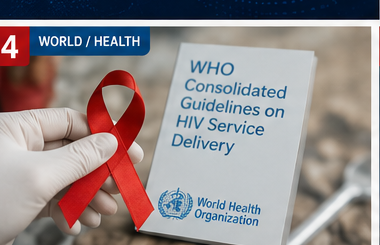
WHO Publishes Consolidated Guidance to Improve HIV Service Delivery
The 50-page document brings together more than a decade of recommendations intended to improve access, continuity, integration and equity in HIV care.