UK Business Activity Returns to Growth, but Recovery Remains Fragile
A preliminary survey shows private-sector activity expanding for the first time in three months, although falling employment and renewed energy-price pressures continue to threaten the recovery.
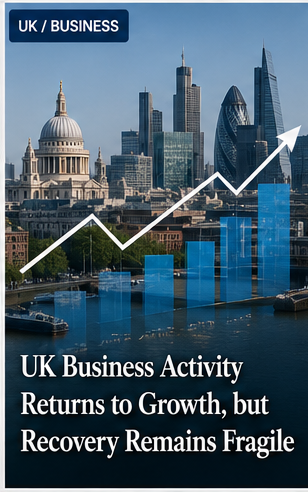
LONDON — British business activity returned to growth in July for the first time in three months, according to a closely watched survey of private-sector companies.
The preliminary S&P Global UK Composite Purchasing Managers' Index rose to 52.1 in July from 49.3 in June. A reading above 50 indicates that activity is expanding, while a figure below 50 suggests contraction.
The July reading was the strongest since February and considerably better than the modest improvement expected by economists surveyed by Reuters.
Both services and manufacturing reported growth. Businesses benefited from a temporary easing in energy and input costs, improved consumer confidence and more favourable trading conditions at the beginning of the month.
However, the survey is an early estimate rather than a complete measure of the economy. Purchasing managers' indices track changes reported by businesses and may differ from later official data on economic output.
Employment continued to fall, reflecting continued caution among employers and the effects of earlier increases in labour-related costs. A recovery in activity that does not produce job growth may offer limited reassurance to households.
The survey also suggested that the improvement may be fragile. Renewed geopolitical conflict and higher energy prices could increase transport, manufacturing and household costs, reversing some of the relief experienced earlier in July.
Business confidence improved, but companies remain concerned about future demand, costs and the wider international environment.
The new Government has announced measures intended to support local economies and reduce costs, including business-rate changes, a bus-fare cap and reduced taxes on household electricity. The long-term effect of those policies will depend on implementation and public finances.
A single month above the growth threshold does not establish a durable recovery. Sustained improvement would require continued expansion in new orders, stronger investment, rising employment and evidence that businesses can absorb cost pressures without sharply raising prices.
The July survey provides an encouraging early signal, but official growth, inflation and labour-market data will be needed before concluding that the UK economy has entered a stable period of expansion.

Scotch Whisky Returns to Zero-Tariff US Trade as First Digital Shipment Is Prepared
British whisky now enters the United States without sector-specific tariffs, while a digitally documented shipment demonstrates how paperless trade could reduce export delays and costs.
Bank of England Warns AI and Market Leverage Could Amplify Financial Shocks
The Bank says the UK financial system remains resilient, but concentrated AI-related markets, rising debt and greater hedge-fund leverage are creating new vulnerabilities.

PRA Fines HDI Global SE £4.165 Million Over Inaccurate Regulatory Data
The insurance company submitted incorrect information relating to Financial Services Compensation Scheme liabilities and levy calculations on multiple occasions between 2021 and 2024.